Cheek breakouts have a way of showing up at the worst possible time, and they often stick around longer than you would like. The good news is that acne on cheeks usually responds well once you understand what is feeding it. For a lot of people it comes down to small daily habits rather than anything deep or hormonal. The phone you press to your face. The pillowcase you have not changed in a while. A moisturiser that quietly clogs your pores. And if earlier breakouts have already left their mark, our acne scar treatment in Dubai can help smooth and even out the skin.
At Modern Aestheticss in Dubai, we see cheek acne in patients of every age and skin type. This guide explains what causes acne on cheeks, how it differs from chin and jawline breakouts, and the treatments that genuinely work, including options for the marks and scars that breakouts leave behind.
Acne on cheeks is mostly caused by clogged pores combined with friction and bacteria from things that touch your face. Gentle cleansing, non-comedogenic products, and cleaner phone and bedding habits clear most cases. Stubborn or scarring acne needs a dermatologist.
What causes acne on cheeks?
Every breakout starts the same way. A pore gets blocked by a mix of oil and dead skin cells, which traps bacteria and triggers inflammation. What makes cheek acne different is how much of it is driven by the outside world rather than something internal. The cheeks are a large, exposed area, and they pick up oil, dirt and bacteria all day long.
The usual culprits behind cheek breakouts:
- Your phone. A screen carries more bacteria than most people expect, and you press it straight onto your cheek during every call.
- Pillowcases and sheets. Oil, sweat and product residue build up on fabric and transfer back to your skin overnight. Wash them once a week at the very least.
- Hands and habits. Resting your cheek in your palm moves oil and bacteria onto the skin. So does touching and picking.
- Hair and hair products. Oils, pomades and leave-in creams drift down onto the cheeks, especially along the hairline.
- Makeup and brushes. Heavy, pore-clogging foundations and brushes that never get cleaned are a frequent trigger.
- Dubai’s climate. Heat and humidity push oil glands to work harder, and sunscreen or makeup can sit heavily on sweaty skin.
Can dandruff cause acne on cheeks?
The short answer is no, not in the direct way most people assume. Dandruff on its own will not give you pimples. What can contribute is the oily, flaky scalp behind it. The yeast linked to dandruff, called Malassezia, can trigger a breakout-like rash known as fungal acne when it gets into pores, and flakes carrying excess oil can settle on the cheeks and hairline. If your “acne” is itchy, very uniform and clustered near the hairline, get it checked, because fungal folliculitis is treated differently from ordinary acne.
The main types of acne
Treating a breakout well starts with naming it. These fall into two broad groups: non-inflammatory and inflammatory.
Whiteheads
Closed clogged pores under the skin.
Blackheads
Open clogged pores that darken as they oxidise.
Papules
Small, red, tender bumps with no head.
Pustules
The classic pimple, inflamed with a white tip.
Nodules
Deep, hard lumps that sit below the surface.
Cysts
Deep, painful, fluid-filled lesions that often scar.
When people ask about the four types of acne, they usually mean whiteheads, blackheads, papules and pustules, the everyday breakouts. Nodules and cysts are the severe ones, the most likely to scar, which is why they should be treated early rather than waited out.
What is hormonal acne?
Hormonal acne is acne driven by shifts in your hormones, mainly androgens like testosterone. When these rise, your oil glands produce more sebum, pores clog faster and breakouts follow. It is the reason acne so often flares in the week before a period, during puberty, around pregnancy, and in conditions like PCOS. It tends to sit deeper and feel more inflamed than surface breakouts, and it usually shows a clear pattern: same time of the month, same part of the face. While the cheeks can be involved, this kind of acne has a favourite address, and that is the lower third of the face.
Hormonal chin acne and the jawline
If your breakouts cluster low on the face, you are most likely dealing with hormonal chin acne. This is the single most common pattern we see in adult women. Hormonal chin acne shows up as deep, tender bumps along the chin and jawline that flare on a cycle and shrug off the spot treatments that work everywhere else.
Chin acne causes are usually internal rather than external. The main chin acne causes include monthly hormonal swings, stress (which raises cortisol and oil production), certain medications, and underlying conditions such as PCOS. Diet plays a smaller role for some people, particularly high-sugar and high-dairy intake. Unlike cheek breakouts, chin acne almost never comes from your phone or pillowcase, which is why the fix is different too.
How to tell if your acne is hormonal
A few signs point to hormones rather than habits. You get hormonal pimples on chin and jaw rather than across the cheeks or forehead. The bumps are deep and sore instead of surface whiteheads. They flare on a predictable schedule, usually the week before your period. And they do not budge with the usual washes and creams. If two or three of those sound familiar, hormones are probably involved. Persistent hormonal pimples on chin areas, alongside irregular periods or extra facial hair, can also be a clue worth raising with a doctor, since it may point to PCOS.
How to treat hormonal acne
Knowing how to treat hormonal acne takes a two-part approach, because you are managing the skin and the hormones behind it at the same time.
At home: a salicylic acid cleanser to keep pores clear, a topical retinoid such as adapalene to speed up skin cell turnover, and benzoyl peroxide to target bacteria on active spots. Keep the routine simple. Over-scrubbing makes those bumps angrier, not calmer.
From a dermatologist: when topicals are not enough, prescription options can reset the cycle. These include spironolactone, which lowers the effect of androgens on the oil glands, certain oral contraceptives that steady hormone levels, and prescription-strength retinoids such as tretinoin. These are choices to make with a doctor rather than off a shelf, because the right one depends on your health history. Acne like this that keeps scarring should never be left to simply run its course.
Treating acne marks and scars
The hardest part of acne is often what it leaves behind. There is an important difference here. Flat brown or red marks are post-inflammatory pigmentation, and they tend to fade over time. Indented or raised scars are textural damage, and they need active treatment. Modern Aestheticss offers acne scars treatment tailored to the exact type of scarring you have. For a full walkthrough of your options, read our guide on how to get rid of acne scars without damaging your skin.
Subcision for rolling scars
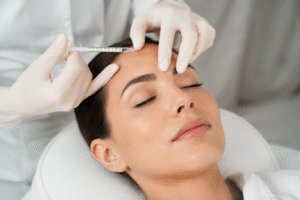
For the soft, wave-like depressions known as rolling scars, subcision acne scars treatment is one of the most effective options. In a subcision, a fine needle is used to release the fibrous bands tethering the scar to the tissue below, which lets the skin lift and smooth out. Subcision acne scars work is usually paired with microneedling or filler for a stronger result, and most people need a short series of sessions. Because it reaches the structure under the skin, this subcision acne scars work suits deeper scars that creams can never touch.
Microneedling and resurfacing
Microneedling is a workhorse for scar treatment. Tiny controlled punctures prompt the skin to rebuild collagen, which softens shallow scars and improves texture over a course of sessions. It pairs well with other methods and suits most skin tones, including the deeper tones we treat across the UAE. Injectable options such as mesotherapy for acne scars can be layered in to support hydration and skin repair.
Laser and acne marks removal
For pigmentation and uneven tone left by old breakouts, laser-based acne marks removal can even things out and brighten the skin. The right device depends on your skin tone and the depth of the marks, which is exactly why it is best planned in person rather than guessed at. Consistent sun protection makes the results last far longer.
A routine that keeps your cheeks clear
Prevention is far easier than repair, and a steady, simple routine does most of the work. Cleanse twice a day with a gentle non-comedogenic cleanser, follow with a lightweight moisturiser, and wear sunscreen every morning. If your skin runs oily, the products you choose matter even more. Our guide to a Skin Care Routine For Oily Skin breaks down the daily steps that keep shine and breakouts in check without stripping your skin.
Then there are the habits that have nothing to do with products: change pillowcases weekly, wipe down your phone screen, wash your makeup brushes, and resist the urge to pick at a spot, however tempting.
Still breaking out? Let’s look at your skin properly
Whether it is stubborn cheek acne, breakouts along the chin and jawline, or scars from old breakouts, a tailored plan beats guesswork. Book a consultation with our team at Modern Aestheticss, an acne treatment clinic in Dubai led by Dr. Shubhangi Perkar.
Message us on WhatsAppWhen to see a dermatologist
Mild acne on cheeks often settles once your habits improve. But if your acne is deep and painful, flaring on a cycle, leaving marks, or simply not improving after a couple of months of consistent care, it is time for professional help. A dermatologist can confirm which type you have and build a plan around it, instead of leaving you to keep guessing with one product after another.
Frequently asked questions
What is the cause of cheek acne?
Acne on cheeks is mainly caused by clogged pores from oil and dead skin cells, combined with friction and bacteria from anything that touches your face during the day, such as your phone, pillowcase, hands and makeup brushes. Heat, humidity and pore-clogging products make it worse.
How do I remove acne, and can it be done 100%?
No treatment removes acne 100% overnight, and any product promising that is overselling. What works is consistency: a gentle non-comedogenic routine, the right active ingredients, and a dermatologist’s help for stubborn or scarring acne. With a proper plan, most people reach clear, controlled skin.
What are the four types of acne?
The four everyday ones are whiteheads, blackheads, papules and pustules. The more severe forms, nodules and cysts, sit deep in the skin and are the most likely to cause scarring.
How do I tell if my acne is hormonal?
Hormonal breakouts usually appear as deep, tender bumps on the lower face, with hormonal pimples on chin and jawline rather than the cheeks. It flares on a cycle, often the week before a period, and does not clear with ordinary spot treatments.
What causes hormonal chin acne?
It is driven by rising androgens that boost oil production. The usual chin acne causes are the menstrual cycle, stress, PCOS and some medications. Because it is internal rather than surface-led, it responds best to treatments aimed at the hormones.
What food triggers hormonal acne, and how long does it last?
High-sugar foods and dairy can worsen breakouts in some people by raising insulin and oil production. It often tracks the menstrual cycle, flaring for one to two weeks a month, and can persist for years until the underlying hormones are addressed with a dermatologist.
Can acne marks and scars be removed?
Flat marks usually fade over time and with laser, while indented scars need active acne scars treatment. Subcision and microneedling rebuild texture in deeper scars over a planned series of sessions.