Skin cancer occurs when abnormal skin cells grow uncontrollably, often due to UV exposure or genetic factors. Early detection is key to successful treatment and prevention of serious complications.
Who Is Risk?
Fair-skinned individuals or those with frequent sun exposure
Family history of skin cancer
People with numerous moles or previous skin injuries
History of tanning bed use
What Are The Symptoms?
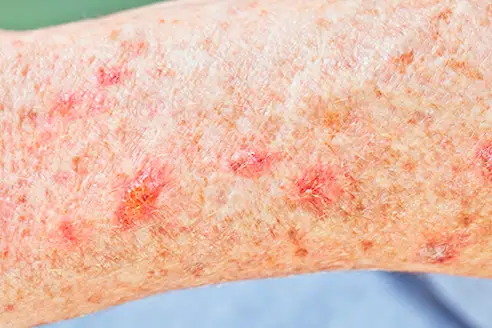
New or changing moles, spots, or lesions
Non-healing sores or ulcers
Red, scaly, or crusted patches
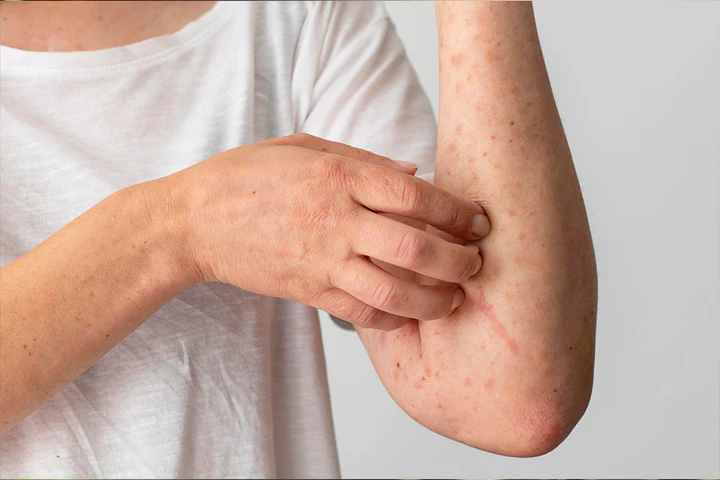
Itching, tenderness, or bleeding in affected areas
Commonly appears on sun-exposed areas like face, arms, and neck
When we talk about skin cancer causes, it helps to think in terms of long-term patterns rather than a single moment. The most common contributors include:
Sun exposure and UV radiation: Ultraviolet (UV) rays from sunlight can damage skin cell DNA over time. In Dubai, UV levels are high for much of the year, so “everyday sun” (walking outdoors, driving, sitting near bright windows, beach days) can add up.
Skin type: People with lighter skin that burns easily have a higher overall risk, but skin cancer can occur in any skin tone. In deeper skin tones, skin cancers can sometimes be noticed later because redness is less visible, which is one reason regular checks can still be valuable.
Genetics and personal history: A family history of skin cancer, a personal history of severe sunburns, many moles, or a previous skin cancer can increase risk.
Immune system factors: Some medical conditions or medications that affect the immune system can make certain skin cancers more likely.
A helpful way to frame this is: skin cancer risk is often a combination of UV exposure plus individual susceptibility. That is also why two people can have very different outcomes despite living in the same climate.
Skin Cancer Treatment Options in Dubai
Our treatment combines medical experience with advanced technology to restore pigment, reduce spread, and support your skin’s health.
• Excision surgery for complete lesion removal • Mohs micrographic surgery for high-risk areas • Cryotherapy for small or superficial lesions • Laser therapy for certain precancerous conditions
Surgical excision is a common approach. The goal is to remove the skin cancer completely with an appropriate safety margin while preserving as much healthy skin as possible.
Some early or superficial lesions, and certain precancerous changes, can sometimes be treated without traditional surgery. Options may include topical prescription treatments or in-clinic procedures such as cryotherapy (freezing a targeted lesion). These are not suitable for every cancer type or every location, so the decision is always individualized.
Treatment does not end the day a lesion is removed. Follow-up is important to:
Check healing and scar maturation
Monitor for recurrence in the treated area
Screen for new lesions elsewhere
Review sun-protective habits that are realistic for life in Dubai
Why You Need A Doctor's Consultation
Skin cancer can progress quickly if untreated
Accurate diagnosis prevents unnecessary procedures
Ensures personalized and safe treatment plans
At Modern Aestheticss Dermatology and Laser Clinic, your care is supervised by qualified dermatologist using international protocols for the Skin Cancer Treatment in Dubai.
If you are considering Skin Cancer Treatment in Dubai, the best next step is a professional assessment so you can replace uncertainty with a clear plan. The visit should feel unhurried, respectful, and focused on helping you understand what is happening on your skin and what options make sense for you. Booking a dermatology consultation for the Skin Cancer Treatment in Dubai.
Yes, with proper sun protection, regular screenings, and monitoring.
Can skin cancer spread?
Certain types like melanoma can spread if not treated early.
How often should I have a skin check?
At least once a year, or more frequently if you have high-risk factors.
Do skin cancer spots always look dark or obviously abnormal?
No. Some skin cancers are not very pigmented and may look pink, pearly, scaly, or like a sore that will not heal. This is why an in-person exam can be more reliable than trying to self-diagnose from photos online.
How is skin cancer diagnosed in dermatology?
Diagnosis starts with a clinical exam, often with dermoscopy. If the lesion is suspicious, a biopsy is performed and the sample is examined under a microscope to confirm the diagnosis.
Why Choose Modern Aestheticss?
Expert dermatologists specializing in skin oncology