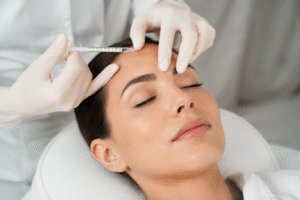
Laser-based rejuvenation has become one of the most requested aesthetic categories in Dubai because it can address multiple concerns (tone, texture, pores, fine lines, pigmentation) with a plan that’s tailored to your skin type and downtime preferences. The challenge is that “laser rejuvenation” is a broad label, different devices treat different problems, and pricing can vary significantly from one protocol to another.
This guide breaks down what rejuvenation laser aesthetics can treat, which laser categories are commonly used, what results typically look like, and how to think about costs in Dubai so you can compare options more confidently.
What “rejuvenation laser aesthetics” actually means
In aesthetic dermatology, “rejuvenation” usually refers to treatments that improve signs of sun damage and aging by targeting one (or both) of these pathways:
-
Pigment and redness control: breaking up excess melanin (brown spots, uneven tone) and reducing visible vessels or diffuse redness.
-
Collagen remodeling: stimulating new collagen and elastin to improve pores, fine lines, early laxity, acne scars, and overall texture.
“Laser aesthetics” can include true lasers (single wavelength) and light-based devices used in the same rejuvenation context (like IPL, which is not technically a laser but is often grouped with laser facials).
If you’re deciding between technologies, Modern Aestheticss has related guides you may find helpful:
-
Understanding the benefits of laser treatments for skin rejuvenation
-
How to choose the right laser skin rejuvenation treatment for your skin type
What rejuvenation lasers can treat (and what they can’t)
A well-selected laser plan can produce meaningful, natural-looking improvement, but it’s important to match the device to the problem.
1) Sun damage and uneven tone
Lasers and light devices are commonly used to improve:
-
Sun spots (solar lentigines)
-
Freckles and mottled pigmentation
-
Overall dullness and uneven tone
Some pigment concerns require extra caution in the UAE because heat and UV exposure can trigger rebound pigmentation. For deeper guidance, see: Sunspots treatment in Dubai.
2) Melasma and stubborn pigmentation (case-by-case)
Melasma is not “just a spot,” it’s a chronic pigment condition influenced by genetics, hormones, inflammation, UV, and heat. Certain lasers can help, but the wrong settings or timing can worsen it. In many cases, dermatologists combine pigment-safe energy settings with a strict home regimen.
If melasma is your main concern, it’s worth reading about pigment strategy first, not just devices.
3) Acne scars and post-acne texture
Rejuvenation lasers can improve the look of atrophic acne scars (rolling, boxcar, some ice-pick patterns when paired with the right adjuncts) by stimulating collagen remodeling.
Most patients see the best results from a combination approach rather than one tool alone. Learn more in: Acne scar treatment in Dubai.
4) Enlarged pores and rough texture
Pores can’t be “erased,” but they can look smaller when collagen support improves and oil balance is controlled. Laser resurfacing and collagen-stimulating treatments can reduce pore visibility, especially when paired with a consistent routine.
5) Fine lines and early crepey texture
Fractional laser resurfacing (ablative or non-ablative depending on downtime tolerance) can soften fine lines and improve “skin quality,” particularly around:
-
Cheeks
-
Under-eye area (with conservative settings and expert assessment)
-
Upper lip (select patients)
-
Neck and chest (often with gentler protocols)
6) Redness and visible vessels (rosacea-prone skin)
Some vascular-focused devices and IPL-type treatments can reduce diffuse redness and visible capillaries. If you flush easily or suspect rosacea, you’ll want a plan that avoids unnecessary irritation. Related reading: What causes rosacea and how to avoid triggers.
What lasers usually cannot do alone
Laser rejuvenation is powerful, but it does not replace everything.
-
Deep structural sagging: lasers can tighten mildly, but moderate to advanced laxity may need ultrasound tightening, threads, or injectables.
-
Dynamic expression wrinkles (forehead lines, crow’s feet): often respond best to neuromodulators.
-
Significant volume loss (temples, midface): often needs volumizing support.
A dermatologist will often layer treatments based on what your face actually needs.
Common laser categories used for rejuvenation
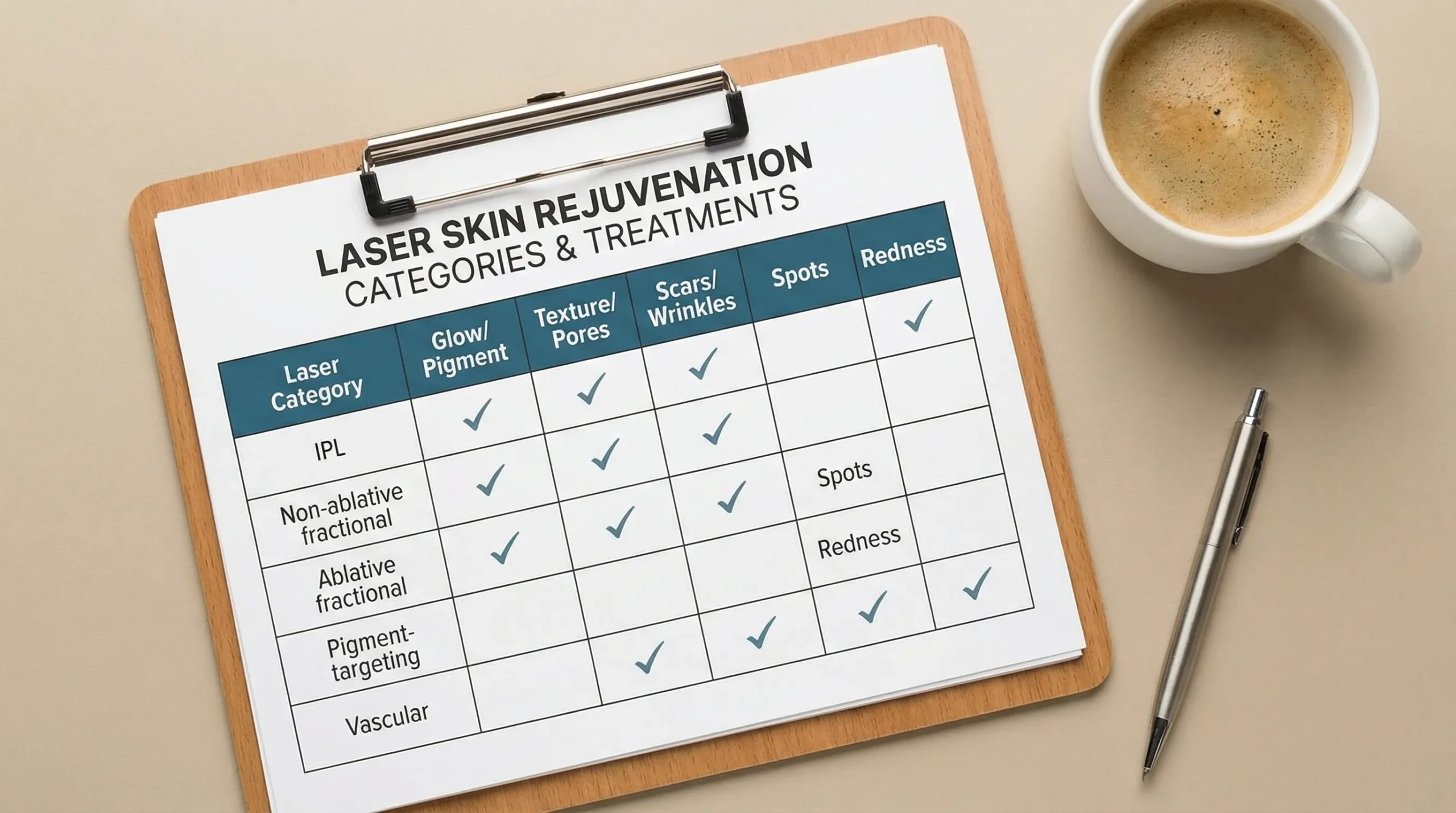
Different “rejuvenation” devices act at different depths and target different chromophores (melanin, hemoglobin, water) or tissue effects.
| Category | What it’s often best for | Typical downtime pattern (varies) | Common session range (varies) |
|---|---|---|---|
| IPL (light-based) | Mild sun damage, superficial pigmentation, some redness, “glow” | Minimal to a few days of mild redness, possible temporary darkening of spots | 3–6 sessions |
| Non-ablative fractional lasers | Texture, pores, mild scars, fine lines with less downtime | Redness and mild swelling for 1–3 days | 3–5 sessions |
| Ablative fractional resurfacing (CO2/Er:YAG family) | Deeper texture change, more pronounced photoaging, acne scar remodeling | Several days to 1–2 weeks depending on intensity | 1–3 sessions (often fewer, stronger) |
| Pigment-targeting lasers (Q-switched and picosecond families) | Certain pigment patterns, tattoo pigment, selective lesion targeting | Usually low downtime, temporary darkening or micro-crusting possible | 2–6 sessions |
| Vascular lasers (device-dependent) | Visible vessels, redness | Often low downtime, temporary swelling possible | 2–4 sessions |
Your dermatologist’s job is to select the safest option for your Fitzpatrick skin type, your pigment risk, and your timeline.
What results look like and how long they take
One reason people get disappointed with laser rejuvenation is timing. Some improvements are fast, others are slow.
-
Pigment and “brightness”: often improves within 1–3 weeks after a session (depending on the technology and your skin’s turnover).
-
Texture and pores: tends to improve gradually over multiple sessions.
-
Collagen remodeling: can continue for 8–12 weeks after a collagen-stimulating session, sometimes longer.
Most dermatologist-led plans in rejuvenation work like this:
-
A series (for example, every 3–6 weeks)
-
Then maintenance (often every 6–12 months depending on concern, skincare, UV exposure, and lifestyle)
Safety and side effects (especially important in Dubai)
Laser treatments are medical procedures. The most common issues are temporary and manageable, but risks increase if settings are wrong for your skin type, if you are tanned, or if aftercare is inconsistent.
Common short-term effects:
-
Redness and warmth
-
Swelling (especially around eyes)
-
Dryness and peeling
-
Temporary darkening of pigment before it lifts
Risks to discuss with your dermatologist:
-
Post-inflammatory hyperpigmentation (PIH), more common in medium to deep skin tones or after excessive heat/inflammation
-
Burns or blistering (rare with correct parameters and cooling)
-
Prolonged redness
-
Cold sore flare-ups in herpes-prone patients (often prevented with prophylaxis when appropriate)
If you want a practical overview of PIH prevention and management after energy-based treatments, this clinic resource is useful: How to treat post-inflammatory hyperpigmentation after laser hair removal.
Rejuvenation laser aesthetics cost in Dubai: what drives the price
Laser pricing is not just “one session = one price.” The cost is determined by clinical complexity, safety requirements, and the intensity of the protocol.
Key cost drivers include:
-
Device category and consumables: some platforms have higher operating costs.
-
Treatment area size: full face vs cheeks vs perioral vs neck.
-
Concern severity: deeper acne scars or advanced photoaging usually need more sessions and sometimes stronger settings.
-
Downtime level: more aggressive resurfacing typically costs more because it requires more time, expertise, and structured aftercare.
-
Provider expertise: dermatologist-led protocols can differ from non-medical settings in assessment, parameters, and complication management.
-
Add-on therapies: some plans combine lasers with injectables or regenerative treatments, which changes the overall budget.
Typical ballpark price ranges you may see in Dubai (per session)
Exact pricing depends on the clinic, the physician, and the technology. The ranges below are approximate market ballparks many patients encounter in Dubai private dermatology and aesthetic clinics, meant to help you plan questions for your consultation (not a quote).
| Treatment type (rejuvenation context) | Common pricing ballpark in Dubai (AED per session, approximate) | Notes |
|---|---|---|
| IPL-style photofacial | 600–1,500 | Often sold as a series for tone and mild pigment/redness. More sessions are common. |
| Non-ablative fractional resurfacing (full face) | 900–2,500 | Often chosen for texture, pores, early lines with limited downtime. |
| Pigment-targeting laser for localized spots | 500–1,500 | Pricing depends on whether it’s “per lesion” or small-area treatment. |
| Ablative fractional resurfacing (full face) | 2,000–6,000+ | Wider range because intensity and downtime vary significantly. May require fewer sessions. |
How to estimate your total cost (simple planning method)
Instead of focusing on the cheapest “per session” number, ask for the total plan:
-
Number of sessions expected
-
What “counts” as a session (full face, face and neck, spot-only, etc.)
-
Whether post-care products are included or separate
-
When maintenance is expected
A practical way to think about budget is:
Total cost = (sessions in the series × cost per session) + maintenance + skincare and SPF
In Dubai, daily sun protection is not optional after rejuvenation. It is part of your result.
Example budgets (illustrative, not clinic-specific)
-
Mild sun damage and dullness: often managed with a multi-session light-based plan. Many patients are quoted a 3–5 session series.
-
Acne scars with texture: often requires a collagen-remodeling series (commonly 3–5 sessions) and may be combined with other techniques.
-
More advanced resurfacing goals: may use fewer but stronger sessions (for example, 1–3), with higher downtime and higher per-session cost.
Your dermatologist should tailor the approach to your skin type and pigment risk.
How to choose the right laser rejuvenation plan (quality checks)
Dubai has excellent aesthetic care, but outcomes depend heavily on assessment and execution. During a consultation, consider asking:
-
Which exact device category is being used for my concern, and why?
-
What is my pigment risk (especially if I tan easily or have had PIH before)?
-
What is the realistic improvement range for my concern (for example, scars vs marks)?
-
How many sessions are typically needed for my severity?
-
What downtime should I plan for, day-by-day?
-
What is the aftercare plan, and what should I stop before treatment?
If your primary concern is acne (active breakouts plus marks/scars), it’s often best to treat acne control first, then layer rejuvenation. See: Acne treatment in Dubai.
Pre-care and aftercare: protect your results (and your spend)
Most complications and “why didn’t it work?” complaints are linked to timing, tanning, or inconsistent aftercare.
Pre-care basics to discuss with your dermatologist:
-
Avoid tanning and heavy sun exposure before sessions
-
Share your full skincare list (especially retinoids, acids, bleaching agents)
-
Disclose pregnancy, breastfeeding status, and relevant medical history
Aftercare essentials (general guidance, always follow your clinician’s instructions):
-
Use gentle cleanser and barrier-support moisturizer
-
Avoid heat exposure (sauna, very hot showers, intense exercise) for the time window you’re given
-
Use high SPF daily and reapply if outdoors
-
Avoid picking at any flaking or micro-crusting
If you’re combining rejuvenation with other procedures (peels, microneedling, injectables), the order and spacing matters. Modern Aestheticss also shares treatment education across categories, for example: Radio frequency microneedling treatments (benefits, costs, procedure).
Frequently Asked Questions
What does rejuvenation laser aesthetics treat best? It commonly treats sun damage, uneven tone, superficial pigmentation, enlarged pores, rough texture, mild fine lines, and some acne scarring, depending on the laser category used.
How many laser rejuvenation sessions will I need? Many protocols are done in a series (often 3–6 sessions), while stronger resurfacing approaches may use fewer sessions. The right number depends on your concern, skin type, and downtime tolerance.
Is laser rejuvenation safe for medium to deep skin tones? It can be, but device choice, settings, cooling, pre-care, and aftercare are critical. Your dermatologist should assess pigment risk and may use more conservative parameters to reduce PIH risk.
How much does laser skin rejuvenation cost in Dubai? Costs vary widely by device and intensity. As a rough planning ballpark, patients often see about AED 600–1,500 for IPL-style sessions, AED 900–2,500 for non-ablative fractional, and AED 2,000–6,000+ for ablative fractional resurfacing, depending on area and protocol.
How long do results last? Pigment and brightness improvements can last months with good sun protection. Collagen-related improvements can last longer, but maintenance sessions and consistent skincare are often recommended, especially in Dubai’s UV and heat.
Book a dermatologist-led laser rejuvenation consultation in Dubai
If you’re considering rejuvenation laser aesthetics and want a plan that matches your skin type, pigment risk, and schedule, book a consultation with the team at Modern Aestheticss. A dermatologist can assess your concerns, recommend the safest device category, outline expected sessions and downtime, and provide an accurate cost estimate based on your goals.