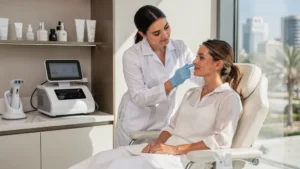
Living in Dubai means year-round sun, heat, and temperature swings between air-conditioned interiors and hot outdoor air, all of which can aggravate rosacea. If you have been searching for practical, science-backed ways to calm redness and bumps without guesswork, this guide lays out How to Reduce Rosacea with a blend of smart home care and dermatologist-led treatments that fit a busy lifestyle.
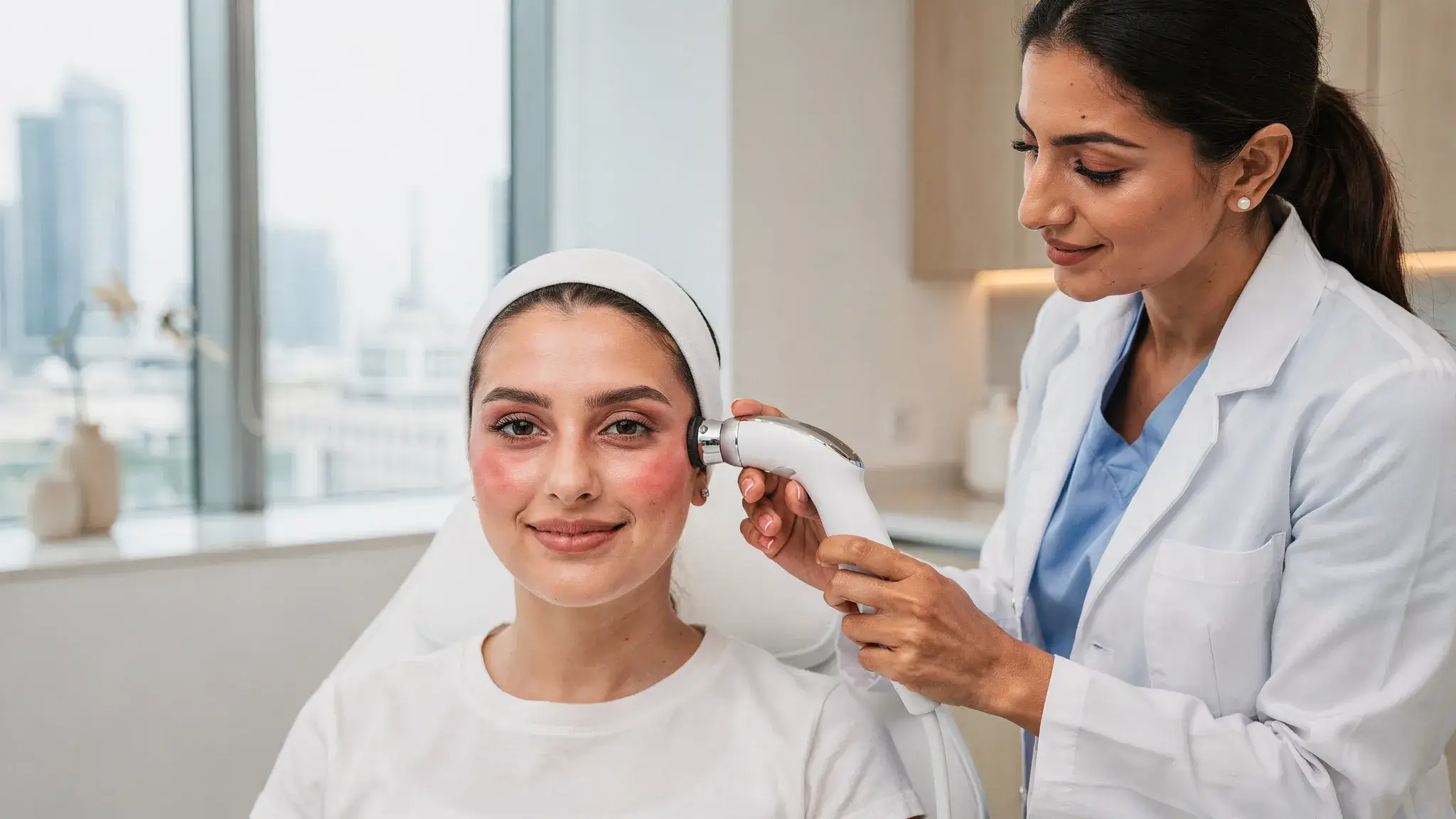
Why rosacea flares, especially in Dubai
Rosacea is a chronic inflammatory condition marked by facial flushing, persistent redness, visible capillaries, and sometimes acne-like bumps. Heat, UV exposure, spicy food, alcohol, vigorous exercise, stress, and harsh skincare are common triggers. The condition typically involves an overactive neurovascular response, a compromised skin barrier, and sometimes an overgrowth of Demodex mites.
If you are unsure where you fit among the types of rosacea, your dermatologist will usually classify you into one or more subtypes: erythematotelangiectatic redness and flushing, papulopustular bumps often called acne rosacea, phymatous changes like thickened nose skin, and ocular involvement with eye irritation. Getting the subtype right matters because it informs dosage, device selection, and the order of care.
A dermatologist’s 90-day plan: How to Reduce Rosacea
The fastest path to calmer skin blends daily prevention, targeted prescriptions, and precise in-clinic therapy. Here is a practical roadmap.
1) Protect and prevent, every single day
-
Use a broad-spectrum, SPF 50 mineral sunscreen with iron oxides, reapply every two to three hours outdoors, and wear a hat. Tinted formulas help conceal redness and block visible light that can worsen pigmentation.
-
Keep skin cool. Rinse with cool water after exercise, avoid very hot showers and saunas, and carry a thermal water mist in your bag.
-
Trigger audit. Track what precedes flares for two weeks, heat, spicy food, red wine, coffee, emotional stress, and adjust gradually instead of cutting everything at once.
2) Medical therapy that is proven to work
Your dermatologist may prescribe topical metronidazole, azelaic acid, or ivermectin for bumps and inflammation, and brimonidine or oxymetazoline to temporarily reduce persistent redness. For papulopustular flares, low-dose doxycycline can calm inflammation without acting as a full antibiotic. Expect early improvements by weeks two to four, with clearer, calmer skin building through week twelve when combined with device therapy.
3) Device therapy for visible vessels and diffuse redness
For diffuse erythema and broken capillaries, modern light-based options are often the difference-maker.
-
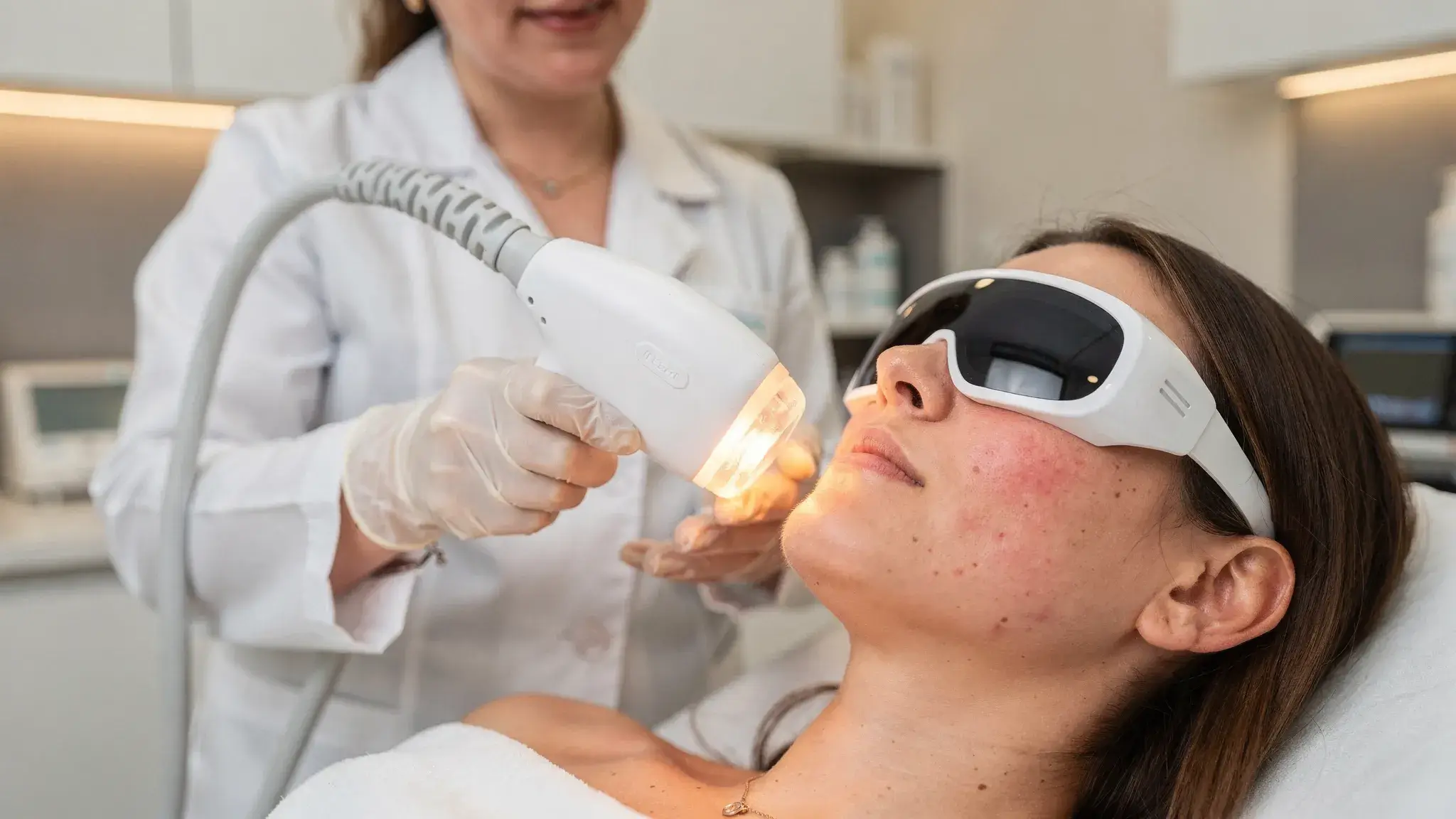
Nordlys IPL targets the hemoglobin in blood vessels using multiple sub-pulses for controlled heating, helpful for diffuse background redness and fine vessels. Learn more about the platform here: Nordlys IPL.
-
When vessels are thicker or more defined, your dermatologist may reach for vascular-specific lasers. Laser treatment can selectively close visible capillaries and reduce diffuse redness for many patients, especially when delivered in a short series with strict sun protection afterward. You can also read about how IPL photorejuvenation supports redness control: IPL Photofacial Treatment in Dubai.
4) Barrier-first skincare
Rosacea-prone skin thrives on minimalism. Choose a gentle, fragrance-free cleanser, a niacinamide and ceramide moisturizer, and avoid gritty scrubs and high-dose exfoliants. If you tolerate vitamin A, use micro-encapsulated retinoids at low frequency. For ingredient education, this primer is useful: Benefits of Niacinamide for Your Skincare.
5) Maintain results
Stick to a stable routine, schedule maintenance energy treatments as advised, and keep a trigger log. This is the boring part, and it is exactly what keeps skin consistently calm.
Comparing in-clinic options at a glance
| Concern | Best-fit modalities | Typical downtime | Notes |
|---|---|---|---|
| Diffuse background redness | IPL with vascular filters, vascular lasers | Low to moderate, transient redness | Great for flushing and telangiectasia clusters, often done in series |
| Papules and pustules | Topicals, low-dose doxycycline, adjunct light if needed | Minimal | Pair with barrier rehab and trigger control |
| Texture and visible pores | Gentle microneedling, hydrating facials | Low, mild pinkness | Use conservative needle depths to avoid flares |
| Pigment from sun exposure | Broad photoprotection, antioxidants, cautious light peels | Low to moderate | Patch test first, avoid flares in active disease |
Focus: Acne Rosacea Treatment
For papulopustular rosacea, sometimes called acne rosacea, the backbone is anti-inflammatory topicals and low-dose oral therapy. Devices can still help because they reduce the vascular component that fuels inflammation, but medication and barrier rehab come first, then light-based treatments once the skin is stable. This sequence controls bumps while reducing relapse risk.
Are peels and needles safe if you flush easily
You can still pursue healthy-skin and anti-aging goals if you apply a rosacea-aware filter to every choice.
-
Chemical peel for rosacea, choose superficial options like enzyme or lactic acid peels in conservative strengths and only when your rosacea is stable. See how the clinic tailors peels safely: Chemical Peels: Transform Your Skin.
-
HIFU (High-Intensity Focused Ultrasound), useful for lifting and tightening. Rosacea patients should patch test or start with conservative settings because heat can trigger temporary flushing. Explore advances that improve comfort here: Ultraformer MPT.
-
For Collagen Stimulation – Microneedling, opt for shallow depths and longer intervals, and avoid performing during active flares. Learn about the approach and aftercare: Microneedling in Dubai.
-
For Volume & Wrinkle Smoothing (Liquid Facelift): Dermal Fillers, these are generally safe when performed by an experienced dermatologist using gentle technique and cold packs to limit flushing.
-
Botox can smooth dynamic lines without impairing the skin barrier. Read more about wrinkle care choices here: Botox in Dubai.
Realistic before and after, and how to measure progress
Expect a visible reduction in background redness and flushing frequency, fewer papules and pustules if they were present, and softer broken capillaries. You can track your journey by taking standardized daylight photos every two to four weeks, logging trigger exposure, and noting how long it takes redness to settle after a known trigger. Many patients notice an earlier return to baseline after heat or exercise by month two, and a steadier, more even tone as light-based treatments accumulate.
Dubai-specific guidance and when to escalate
-
Schedule energy treatments outside peak UV months when practical, and be extra diligent with SPF during outdoor events and beach days.
-
Always patch test if you have medium to dark skin tones, devices and peel strengths are adjusted to your melanin level to reduce post-inflammatory hyperpigmentation risk.
-
Escalate care if redness is persistent despite adherence, if you experience eye symptoms like gritty, watery eyes, or if thickening skin develops on the nose or cheeks.
If you are comparing clinics for Rosacea Treatment in Dubai, look for dermatologist-led protocols, patch testing on request, and platforms that can treat both diffuse redness and discrete vessels. You can also review the clinic’s rosacea overview for more context: Rosacea, symptoms and effective treatments.
Key takeaways you can use today
-
How to Reduce Rosacea starts with three pillars, trigger control, evidence-based prescriptions, and targeted light-based therapy for redness and vessels.
-
Think sequence, calm inflammation first, then add devices, then maintain with barrier-first skincare.
-
Anti-aging is still on the table, you just need rosacea-friendly settings and timing for HIFU, microneedling, fillers, and Botox.
-
Consistency wins, a simple routine you can stick to will outperform an aggressive routine you abandon.
Modern Aestheticss Dermatology and Laser Clinic is led by experienced female dermatologists who personalize care for sensitive, reactive skin. If you are searching for the Best Dermatologist in Dubai to guide a results-focused plan, book a consultation with Dr. Shubhangi Perkar for a tailored protocol that aligns with your lifestyle and skin type. This is How to Reduce Rosacea thoughtfully, safely, and sustainably in Dubai’s climate.