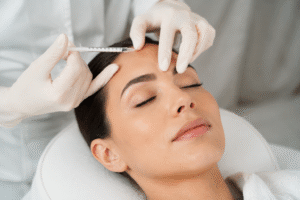
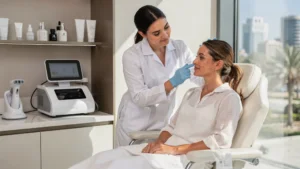
Acne scars can remain long after active acne has cleared, affecting skin texture, smoothness and confidence. Some scars appear as shallow depressions, while others form narrow pits or deeper indentations beneath the skin. The most appropriate treatment depends on the type of scarring, its depth, skin tone and whether active acne is still present.
For people considering acne scar treatment in Dubai, three commonly discussed options are laser resurfacing, microneedling and subcision. Each treatment works differently. Laser procedures can improve selected scars and skin texture, microneedling stimulates collagen production, and subcision releases fibrous bands that pull certain scars downwards.
There is no single procedure that works best for every acne scar. Some patients benefit from one treatment, while others may require a combination of techniques to address different scar types.
At Modern Aestheticss, understanding these treatment differences can help you evaluate your options, ask informed questions during a consultation and develop realistic expectations about acne scar improvement.
What Causes Acne Scars?
Acne scars develop when inflammation associated with acne damages the skin and the underlying tissue. During healing, the body produces collagen to repair the affected area. If too little or too much collagen forms, permanent changes in skin texture may develop.
The severity of scarring can depend on several factors, including the intensity and duration of acne inflammation, individual healing patterns, genetics and whether acne lesions were picked or squeezed.
It is important to distinguish true acne scars from post-inflammatory hyperpigmentation. Dark marks left after acne are changes in skin colour rather than indentations or raised scar tissue. They often respond to different treatments.
Before choosing an acne scar procedure, a professional assessment can help identify the type of scarring and determine whether pigmentation, active acne or other skin concerns also need attention.
Types of Acne Scars and Their Treatment Options
Understanding scar type is essential when comparing procedures.
1. Ice pick scars
Ice pick scars are narrow, deep indentations that extend into the skin. They may resemble small puncture marks and can be difficult to treat with surface-level procedures alone.
Depending on their depth and appearance, treatment options may include selected focal procedures, such as trichloroacetic acid chemical reconstruction techniques performed by qualified professionals, or other scar-specific approaches. Laser resurfacing or microneedling may be used as part of a broader plan but may not adequately address every deep ice pick scar on their own.
2. Boxcar scars
Boxcar scars are depressions with relatively defined edges and a broader base. They can be shallow or deep.
Fractional laser resurfacing and microneedling may improve selected boxcar scars by stimulating collagen remodelling. Deeper scars may require a more targeted approach, depending on their structure.
3. Rolling scars
Rolling scars create an uneven, wave-like appearance across the skin. They are often associated with fibrous bands that attach the skin to deeper tissue.
Subcision is frequently considered for suitable rolling scars because it releases these bands, allowing the depressed skin to lift. Laser resurfacing or microneedling may be used alongside subcision when additional texture improvement is needed.
4. Mixed acne scars
Many people have more than one scar type. For example, the cheeks may have rolling scars, boxcar scars and enlarged pores at the same time.
A combination treatment plan may be more appropriate than relying on a single procedure. Treatment should be selected according to each scar’s structure and the patient’s skin characteristics.
Acne Scar Removal Dubai: Which Treatment Works Best?
People searching for acne scar removal Dubai often want to know which procedure offers the most noticeable improvement with the least downtime.
The answer depends on the scars being treated.
| Treatment | How it works | Most relevant for | Key consideration |
|---|---|---|---|
| Fractional laser resurfacing | Creates controlled treatment zones to stimulate skin remodelling | Selected boxcar scars and uneven texture | May involve redness, downtime and pigment-related risks |
| Microneedling | Uses fine needles to stimulate collagen production | Selected shallow or moderate atrophic scars | Multiple sessions are commonly required |
| Subcision | Releases fibrous bands beneath depressed scars | Selected rolling scars and tethered depressions | Bruising and swelling can occur |
| Combination treatment | Addresses different scar structures using complementary procedures | Mixed scar types | Requires careful sequencing and recovery planning |
These treatments improve scars rather than guaranteeing complete removal. The likely degree of improvement depends on scar type, treatment intensity, skin response and the number of sessions.
1. Acne Scar Laser Treatment Dubai: How Does It Work?
Acne scar laser treatment Dubai commonly involves fractional laser resurfacing. These devices create controlled microscopic treatment zones in the skin, encouraging collagen remodelling as the tissue heals.
Laser technologies vary in wavelength, intensity and depth of action. Ablative fractional lasers, such as fractional carbon dioxide lasers, remove tiny columns of tissue, while non-ablative fractional lasers heat targeted areas without removing the same amount of surface tissue.
The most appropriate device depends on scar depth, skin tone, treatment goals and tolerance for downtime.
Benefits of laser treatment for acne scars
Laser resurfacing may help improve:
- Selected depressed acne scars.
- Uneven skin texture.
- Certain boxcar scars.
- The appearance of enlarged pores associated with irregular skin texture.
Fractional laser treatment can stimulate collagen remodelling, but the response develops gradually rather than immediately.
Limitations of laser treatment
Laser resurfacing may not adequately release the fibrous bands responsible for tethered rolling scars. Deep ice pick scars may also require more targeted procedures.
Potential side effects include redness, swelling, temporary skin sensitivity, crusting and changes in pigmentation. Ablative procedures generally involve more downtime than less intensive non-ablative approaches.
People with darker skin tones may have a higher risk of post-inflammatory hyperpigmentation after some laser procedures. Treatment settings and aftercare should therefore be selected carefully.
Who may benefit from laser treatment?
Laser resurfacing may be considered for people with selected atrophic acne scars and uneven skin texture who are suitable candidates after assessment.
A consultation should establish the expected degree of improvement, likely recovery time and whether additional procedures may be needed.
2. Microneedling for Acne Scars: Is It Effective?
Microneedling for acne scars uses fine needles to create controlled micro-injuries in the skin. The healing response stimulates collagen production and remodelling, which may gradually improve selected depressed scars.
Microneedling is different from subcision because it does not directly release the deeper fibrous bands that tether some scars to underlying tissue.
Potential benefits of microneedling
Microneedling may help improve:
- Selected shallow or moderate atrophic acne scars.
- Uneven skin texture.
- The appearance of some enlarged pores.
- Overall skin smoothness in suitable patients.
It is often considered when a gradual approach to collagen stimulation is appropriate.
How many sessions are needed?
Several sessions are commonly required, with intervals determined by the treatment protocol and the skin’s recovery. Improvement develops gradually as collagen remodelling takes place.
The number of sessions depends on scar type, depth, device, treatment intensity and individual response.
Risks and limitations
Temporary redness, swelling, pinpoint bleeding and sensitivity can occur. Infection, prolonged inflammation and post-inflammatory hyperpigmentation are possible complications, particularly if treatment is performed improperly or aftercare is inadequate.
Microneedling may provide limited improvement for deep, sharply defined or strongly tethered scars. It should not be performed over active skin infections, and active inflammatory acne may need to be controlled first.
Is microneedling suitable for darker skin?
Microneedling may be considered for selected patients with darker skin tones, but it is not risk-free. Inflammation can still trigger pigmentation changes.
A qualified professional should assess skin sensitivity, scar type and previous treatment reactions before recommending the procedure.
3. Subcision for Acne Scars: How Does It Work?
Subcision for acne scars is a minor procedure designed to release fibrous bands that pull depressed scars downwards.
A trained medical professional inserts an appropriate needle or specialised instrument beneath the scar and carefully releases the tethering tissue. As the mechanical restriction is reduced, the depressed area may become less noticeable.
Subcision is particularly relevant to selected rolling scars, although suitability depends on the individual scar’s anatomy.
Benefits of subcision
Subcision may help:
- Release tethered rolling scars.
- Improve selected depressed areas.
- Address scar structures that surface-level treatments cannot adequately reach.
- Complement laser resurfacing or microneedling in a combination plan.
What happens during recovery?
Local anaesthetic is generally used to improve comfort. After the procedure, bruising, swelling, tenderness and temporary discolouration may occur.
Recovery varies depending on the extent of treatment and individual healing. Patients should follow the practitioner’s aftercare instructions and avoid unnecessary pressure or manipulation of the treated area.
Limitations and risks
Subcision is not suitable for every scar type. It may be less useful for narrow ice pick scars or scars that are not tethered to underlying tissue.
Potential complications include bruising, haematoma, infection, persistent lumps, pigment changes and injury to nearby structures. Appropriate technique and patient selection are important.
Can subcision be combined with laser treatment?
Yes, selected patients may benefit from combining subcision with fractional laser resurfacing or another procedure. Subcision addresses tethering, while resurfacing may improve the remaining surface irregularities.
The treatments may need to be staged to allow appropriate healing and reduce complications. The timing should be determined by the treating professional.
4. Atrophic Acne Scars Treatment: Why Does Scar Type Matter?
Atrophic acne scars treatment focuses on depressed scars caused by a loss of tissue or changes in the collagen structure beneath the skin.
The three main types—ice pick, boxcar and rolling scars—differ in shape, depth and underlying structure. This is why a treatment that works well for one type may provide limited improvement for another.
For example, microneedling may help selected shallow depressions, while subcision may be more appropriate for tethered rolling scars. Fractional laser resurfacing may help improve texture in selected boxcar scars.
Deep ice pick scars may require targeted techniques rather than relying on broad resurfacing alone.
Why combination treatment may be recommended
A patient with mixed acne scars may need different techniques for different areas. A professional may recommend treating tethered scars first and addressing residual surface texture later.
Combination treatment should be based on a clear clinical rationale. More procedures do not automatically mean better results, and unnecessary treatment can increase downtime and risk.
5. Deep Acne Scar Treatment Dubai: What Are the Options?
People looking for deep acne scar treatment may need a more targeted plan than someone with mild surface irregularities.
Deep scars can extend into the dermis or be attached to deeper tissue, limiting the effectiveness of superficial procedures alone.
Depending on the scar type, a clinician may consider subcision, focal chemical reconstruction techniques, punch procedures or fractional resurfacing. These treatments have different indications and risk profiles.
Treatment for deep rolling scars
Subcision may be considered when fibrous bands pull the skin downwards. Further treatment may be needed to improve residual uneven texture.
Treatment for deep boxcar scars
The edges and depth of boxcar scars influence the choice of treatment. Selected scars may benefit from fractional resurfacing or targeted techniques.
Treatment for ice pick scars
Narrow, deep scars may respond better to targeted focal procedures than to broad resurfacing alone. A qualified professional should determine whether such techniques are appropriate.
Realistic expectations
Deep scars can be challenging to treat, and complete removal is rarely a realistic expectation. The aim is generally to make scars less noticeable and improve the overall skin texture.
Several treatment sessions or staged procedures may be needed, and the final result depends on individual healing and scar characteristics.
6. Acne Scar Treatment Cost Dubai: What Affects the Price?
The acne scar treatment cost Dubai varies according to the procedure, severity of scarring, size of the treatment area and number of sessions required.
There is no single price that applies to every patient. A consultation can help establish which treatments may be suitable and what the overall treatment plan could involve.
Main factors influencing cost
Type of procedure: Laser resurfacing, microneedling and subcision involve different equipment, techniques and clinical requirements.
Scar severity: Extensive or deep scarring may require more complex or staged treatment.
Treatment area: Treating the full face may cost more than treating a limited area.
Number of sessions: Microneedling and certain laser procedures commonly require multiple sessions. Subcision may also be repeated in selected cases.
Combination treatments: Patients with mixed scar types may require more than one technique.
Follow-up and aftercare: Review appointments and appropriate skincare products may contribute to the overall cost.
When comparing prices, consider the full course of treatment rather than the price of one session. Ask about the expected number of sessions, likely recovery time, potential complications and whether additional procedures may be recommended.
7. How to Choose the Best Dermatologist for Acne Scars Dubai
Finding the best dermatologist for acne scars Dubai involves looking beyond promotional claims or the name of a particular device.
A suitable professional should be able to assess scar types, explain treatment options and discuss the realistic degree of improvement that may be possible.
Consider the following when evaluating a provider:
- Relevant qualifications: Check the practitioner’s credentials and experience with acne scar procedures.
- Scar assessment: The proposed treatment should reflect the type, depth and distribution of your scars.
- Personalised recommendations: The practitioner should explain why a particular procedure is appropriate rather than recommending the same treatment to everyone.
- Transparent risks: Ask about downtime, pigmentation changes, infection and other potential complications.
- Clear pricing: Request an explanation of session costs and the likely total treatment plan.
- Realistic expectations: Be cautious of claims that scars can be removed completely or permanently in one session.
- Aftercare and follow-up: Appropriate guidance should be provided before and after treatment.
At Modern Aestheticss, patients can use these considerations when exploring acne scar treatment options and preparing questions for a professional consultation.
8. When Should Active Acne Be Treated First?
If active acne is still developing, controlling it is often an important step before beginning intensive scar procedures.
New inflammatory lesions can create additional scars and interfere with treatment progress. Some procedures may also be unsuitable when active inflammatory acne or a skin infection is present.
A professional may recommend a plan that addresses active acne first and introduces scar treatment once the condition is sufficiently controlled.
This approach helps reduce the likelihood of new scars forming while existing scars are being treated.
9. How to Prepare for Acne Scar Treatment
Preparation depends on the procedure and the patient’s skin condition. Before treatment, discuss your current skincare routine, medicines and previous procedures with the treating professional.
You may be advised to:
- Disclose all prescription medicines and topical products.
- Avoid unnecessary tanning and excessive sun exposure.
- Follow guidance on retinoids, exfoliants and other potentially irritating products.
- Inform the practitioner about any history of abnormal scarring, pigmentation changes or delayed healing.
- Discuss active acne, cold sores, skin infections or other relevant medical concerns.
Do not stop prescribed medicines without advice from the prescribing professional.
10. Aftercare and Long-Term Results
Aftercare helps support healing and reduce the risk of complications.
Follow the specific instructions provided for your procedure. These may include gentle cleansing, suitable moisturisation, avoiding irritating products and protecting the skin from sunlight.
Use broad-spectrum sunscreen with SPF 50 or higher when appropriate, particularly after procedures that increase skin sensitivity. Avoid picking at crusts or manipulating healing areas.
Results develop gradually. Collagen remodelling can take several months, and the improvement achieved varies according to scar type, treatment choice and individual healing.
Acne scar procedures improve the appearance of scars rather than guaranteeing complete removal. Maintenance and continued control of active acne can help preserve progress.
Conclusion: Which Acne Scar Treatment in Dubai Is Right for You?
Laser resurfacing, microneedling and subcision address different aspects of acne scarring. Laser treatment may improve selected scars and skin texture, microneedling stimulates collagen remodelling, and subcision releases fibrous bands beneath suitable depressed scars.
The most appropriate acne scar treatment in Dubai depends on the type and depth of scarring, skin tone, active acne and treatment goals. Patients with mixed scars may benefit from a combination of techniques, while others may achieve improvement with a more focused approach.
At Modern Aestheticss, understanding the available treatment options can help you make informed decisions about your skin concerns. A professional assessment should clarify which procedures may be appropriate, the likely recovery period, the expected cost and the limitations of treatment.
The goal is meaningful improvement in skin texture with realistic expectations and careful attention to safety.
Frequently Asked Questions
1. What is the best acne scar treatment in Dubai?
The best treatment depends on scar type and severity. Laser resurfacing may help selected scars and uneven texture, microneedling can stimulate collagen production, and subcision may improve tethered rolling scars. Some patients require a combination of procedures.
2. Can acne scars be removed permanently?
Acne scar treatments can improve the appearance of scars, but complete removal cannot be guaranteed. Some scars remain visible even after multiple sessions, and the degree of improvement varies between individuals.
3. Is laser treatment better than microneedling for acne scars?
Neither is universally better. Laser resurfacing may be useful for selected scars and surface irregularities, while microneedling can improve certain atrophic scars through collagen stimulation. Skin tone, scar type and recovery requirements influence the choice.
4. Is subcision effective for deep acne scars?
Subcision may be effective for selected depressed scars, particularly rolling scars tethered by fibrous bands. It is less suitable for some narrow ice pick scars and may need to be combined with other procedures.
5. How many sessions are needed for acne scar treatment?
The number of sessions depends on the scar type, treatment method and individual response. Several microneedling or laser sessions may be required, while subcision may be performed once or repeated in selected cases.
6. How much does acne scar treatment cost in Dubai?
Costs vary according to the procedure, scar severity, treatment area and number of sessions. An individual assessment can help establish the likely total cost and whether a single treatment or combination approach is appropriate.
7. Is microneedling safe for darker skin?
Microneedling may be suitable for selected patients with darker skin tones, but irritation can still trigger post-inflammatory hyperpigmentation. Appropriate technique, skin assessment and aftercare are important.
8. Can deep acne scars be treated without surgery?
Some deep acne scars may improve with non-surgical treatments, including selected laser procedures and microneedling. However, tethered or very deep scars may require targeted procedures such as subcision or other scar-specific techniques.
9. Should active acne be treated before acne scar removal?
Often, yes. Controlling active acne helps reduce the risk of new scars developing and may improve the suitability of later procedures. The appropriate timing depends on the acne severity and treatment being considered.
10. How long does it take to see results from acne scar treatment?
Improvement develops gradually. Some changes may become noticeable after the initial recovery period, but collagen remodelling can take several months. Multiple sessions may be needed for more substantial improvement.
11. Can laser treatment or microneedling make acne scars worse?
Complications are possible with either procedure. Excessive inflammation, infection or unsuitable treatment settings can cause additional scarring or pigmentation changes. Proper assessment and qualified treatment help reduce these risks.
12. How do I choose a provider for acne scar treatment in Dubai?
Check relevant qualifications, experience with different scar types, transparent pricing, clear aftercare instructions and realistic outcome expectations. A suitable provider should explain why a particular treatment is recommended for your skin.
Brand: Modern Aestheticss
Clinical note: Treatment suitability, recovery and results vary between individuals. Acne scar procedures should be considered only after an appropriate professional assessment.