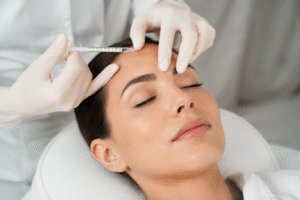
A Q-switch Nd:YAG laser is a medical-grade laser that fires ultra-short, high-energy pulses at two wavelengths, 1064nm and 532nm, to break down pigment and tattoo ink beneath the skin without harming the tissue around it. In Dubai, it’s one of the most widely used lasers for sunspots, uneven skin tone, the carbon facial peel, and tattoo removal.
If you’ve been researching pigmentation or tattoo removal treatments, you’ve probably run into this laser more than once. It’s a workhorse device in dermatology because it does one job extremely well: breaking apart pigment and ink at a precise depth, without damaging the skin around it. Here’s how it actually works, what it can treat, and what a session in Dubai typically costs.
What Is a Q-Switch Nd:YAG Laser?
“Q-switch” refers to the way the laser stores and releases energy: in nanosecond bursts so fast that heat doesn’t have time to spread into surrounding tissue. “Nd:YAG” is the crystal inside the device, neodymium-doped yttrium aluminium garnet, which produces light at two distinct wavelengths depending on how it’s configured.
That dual-wavelength design is what makes it so versatile. One setting reaches deep into the skin, the other works closer to the surface, so a single laser can treat concerns at very different depths in one device.
At Modern Aestheticss, every session is performed by Dr. Shubhangi Parkar, a DHA-licensed consultant dermatologist, who calibrates the laser to your skin type and Fitzpatrick classification before treatment begins.
| Detail | Information |
|---|---|
| Wavelengths | 1064nm (deep) and 532nm (surface) |
| Session length | 20 to 45 minutes |
| Downtime | Minimal; mild redness fading within hours |
| Sessions needed | 3 to 8 for pigmentation, more for tattoo removal |
| Results | Progressive improvement from session 2 onward |
| Aftercare | Daily SPF 50 for several weeks post-treatment |
| Treatment areas | Face, neck, hands, body |
How the Two Wavelengths Work
The 1064nm wavelength penetrates deeper and is absorbed by dark melanin and black or dark blue ink, which is why it’s the go-to setting for dermal pigmentation and darker tattoos. The 532nm wavelength stays closer to the surface and targets lighter pigmentation, freckles, sunspots, and red or brightly coloured ink. A third setting, sometimes run at 1320nm, is used for the carbon facial peel to improve pore size, oil control, and overall tone.
What Does It Treat?
Sunspots and age spots
The 532nm setting is absorbed by melanin in surface pigmentation, and most patients notice visible fading from the second or third session.
Uneven tone and dullness
At lower energy settings, the same laser is used for laser toning, a brightening protocol popular in Dubai for patients wanting more radiance.
Tattoo removal
Dark ink responds to 1064nm, while coloured inks respond better to 532nm. Older, faded tattoos generally need fewer sessions than dense, fresh ink.
Birthmarks and pigmented lesions
Certain birthmarks, including nevus of Ota and Becker’s nevus, respond well because the laser selectively targets pigment while sparing surrounding tissue.
Side Effects and What to Expect After Treatment
Most people describe the sensation as a quick snap, similar to a rubber band against the skin, and tolerate it well without numbing cream. Mild redness and warmth are normal immediately afterward and usually settle within a few hours.
Treated pigment often looks slightly darker before it fades, flaking away naturally within seven to ten days as the body clears the fragmented particles. In darker skin tones, there’s a risk of post-inflammatory hyperpigmentation if the energy is set too high, which is why calibrating to your Fitzpatrick type matters.
The main trade-off with this laser is that results build gradually rather than appearing after one visit, multiple sessions are usually needed, and strict sun protection afterward isn’t optional. A proper consultation beforehand is what determines whether you’re a good candidate.
Q Switch Laser Price in Dubai
Pricing depends on the treatment type, area, and number of sessions required, and is confirmed at consultation after Dr. Parkar assesses your skin.
| Treatment | Session Details |
|---|---|
| Laser toning / skin brightening | 6 to 8 sessions, 2 to 3 weeks apart, 20 to 30 min each |
| Pigmentation treatment | 3 to 8 sessions, 3 to 4 weeks apart, 30 to 45 min each |
| Carbon facial peel | 4 to 6 sessions, 2 weeks apart, 30 min each |
| Tattoo removal | 5 to 15 sessions, 6 to 8 weeks apart, 15 to 45 min each |
| Birthmark treatment | 3 to 6 sessions, 4 to 6 weeks apart, 20 to 40 min each |
At Modern Aestheticss, every session is performed directly by Dr. Parkar rather than a technician, which is reflected in the price and, more importantly, in the consistency of results. WhatsApp +971 52 113 6999 for a personalised estimate.
Why Choose Modern Aestheticss
Every treatment is assessed and performed by a consultant dermatologist, never handed off to an unqualified technician. Protocols are calibrated to each patient’s Fitzpatrick skin type, which matters in a city as ethnically diverse as Dubai, to minimise the risk of hyperpigmentation treatment Dubai and get the best clinical outcome. Pigmentation is diagnosed properly before any laser setting is chosen, rather than applying the same package to everyone who walks in.
Book Your Q-Switch Nd:YAG Laser Consultation
Treated by Dr. Shubhangi Parkar, DHA-Licensed Consultant Dermatologist
WhatsApp: +971 52 113 6999NASSIMA Tower, Sheikh Zayed Road, Dubai | Mon-Sat 10am-9pm | Sun 10am-8pm
Frequently Asked Questions
What is a Q-switch Nd:YAG laser used for?
It treats a wide range of pigment-related concerns, including sunspots, freckles, age spots, uneven tone, birthmarks, and tattoo ink. Its dual wavelength lets it work at different depths in the skin, making it one of the more versatile laser platforms in dermatology.
How long do results last?
Results aren’t permanent the way surgery is, but they’re long-lasting with proper sun protection. Pigmentation and brightening results typically hold for several months, with maintenance sessions every three to six months recommended for ongoing skin tone management.
How many sessions will I need?
It depends on what’s being treated. Toning protocols are usually monthly, tattoo removal can take five to fifteen sessions depending on the ink, and sunspots or freckles often show results within two to four sessions.
Is this better than HydraFacial?
They’re not really alternatives. HydraFacial works on surface-level texture, congestion, and hydration, while this laser reaches pigment deeper in the skin that HydraFacial can’t touch. Many patients use both as part of a broader skincare plan.
What does it cost in Dubai?
At Modern Aestheticss, sessions typically range from around AED 500 to AED 1,500 depending on the treatment and area, confirmed after a consultation with Dr. Parkar.