Dubai’s tropical sun brings postcard-worthy beaches, but it also delivers intense ultraviolet exposure that can leave skin a few shades darker in just a weekend. If you have been googling “what is tan removal”, this guide breaks down the science of tanning, why pigmentation lingers, and how modern treatments lift discoloration without damaging the skin barrier.
Understanding the Tanning Process
Tanning is an innate protective mechanism of your skin. Melanocytes are stimulated by the ultraviolet (UV) rays to produce increased amounts of melanin which is the pigment that absorbs as well as scatters the radiation. Although melanin acts as a barrier against DNA damage, its irregular distribution results in the formation of visible spots, particularly on the face, neck, and arms. Research conducted by the Indian Association of Dermatologists reveals that continuous exposure to UV A can lead to a two-fold increase in epidermal melanin within just 72 hours, and the pigment can stay for months if not treated with active intervention.
What Is Tan Removal?
Tan removal has dermatological aspects, and it involves professional methods to hasten the breakdown of extra melanin and get the skin back to its original color. In contrast to domestic scrubbing agents that simply remove the outermost layers of dead skin, the scientifically proven tan removal procedures focus on the entire process of pigmentation, melanin production, movement, and storage, at the same time, keeping the skin unscathed.
At-Home vs In-Clinic Approaches
| Approach | Mechanism | Typical Result | Downtime |
|---|---|---|---|
| Over-the-counter exfoliating washes | Removes dead cells on stratum corneum | Brightens dull skin temporarily | None |
| Dermatologist-prescribed depigmenting creams (hydroquinone 4 percent, kojic acid 1 percent) | Inhibits tyrosinase enzyme | 30-50 percent lightening in 8-12 weeks | Mild redness, peeling |
| Chemical peels (20 percent glycolic or salicylic) | Controlled epidermal ablation plus melanocyte regulation | One-tone lightening after 2-3 sessions | 12-24 hours superficial flaking |
| Q-Switched Nd:YAG laser toning | Photoacoustic shattering of melanosomes | Up to 70 percent clearance in 4-6 sessions | 30-60 minutes transient erythema |
| Picosecond lasers | Sub-nanosecond melanin fragmentation, collagen stimulation | Faster results (3-4 sessions) with lower thermal injury | Minimal |
How Professional Tan Removal Treatments Work
1. Chemical Peels
Alpha hydroxy acids (glycolic, lactic) and beta hydroxy acids (salicylic) break intercellular bonds, shedding pigmented cells. A randomized study in the Journal of Cutaneous and Aesthetic Surgery found 35 percent glycolic peel achieved a 45 percent melanin index reduction versus placebo after three sessions.
2. Microdermabrasion
A diamond-tip device gently sands the epidermis, improving product penetration. Good for melasma exacerbated by superficial tanning.
3. Laser Toning (Q-Switched 1064 nm)
Delivers short, high-peak pulses that fragment dermal melanin. Thermal diffusion is minimal, making it suitable for Indian Fitzpatrick IV-V skin. Internal link: Understanding the Benefits of Laser Treatments for Skin Rejuvenation.
4. Picosecond Lasers
Picosecond technology fires pulses 100 times faster than Q-Switched, creating a photo-mechanical effect that breaks pigment into minute particles cleared by macrophages.
5. IPL Photofacials
Broad-spectrum flashes selectively absorb pigment and hemoglobin, simultaneously treating redness and tanning. Downtime is low, but multiple passes are needed.
6. Combination Protocols
Dermatologists often layer modalities, eg, a light salicylic peel followed by low-fluence laser to achieve synergistic results while minimizing side effects.
Choosing a Tan Removal Treatment in Dubai
-
Skin type and underlying conditions (acne, melasma, PCOS-related pigmentation).
-
Lifestyle and sun exposure. Outdoor workers may need maintenance sessions every quarter.
-
Technology access. Not all local centers have FDA-cleared pico lasers; traveling to a metro or partnering clinic may be worth the effort.
-
Practitioner expertise. Verify Dermatology Council of India certification.
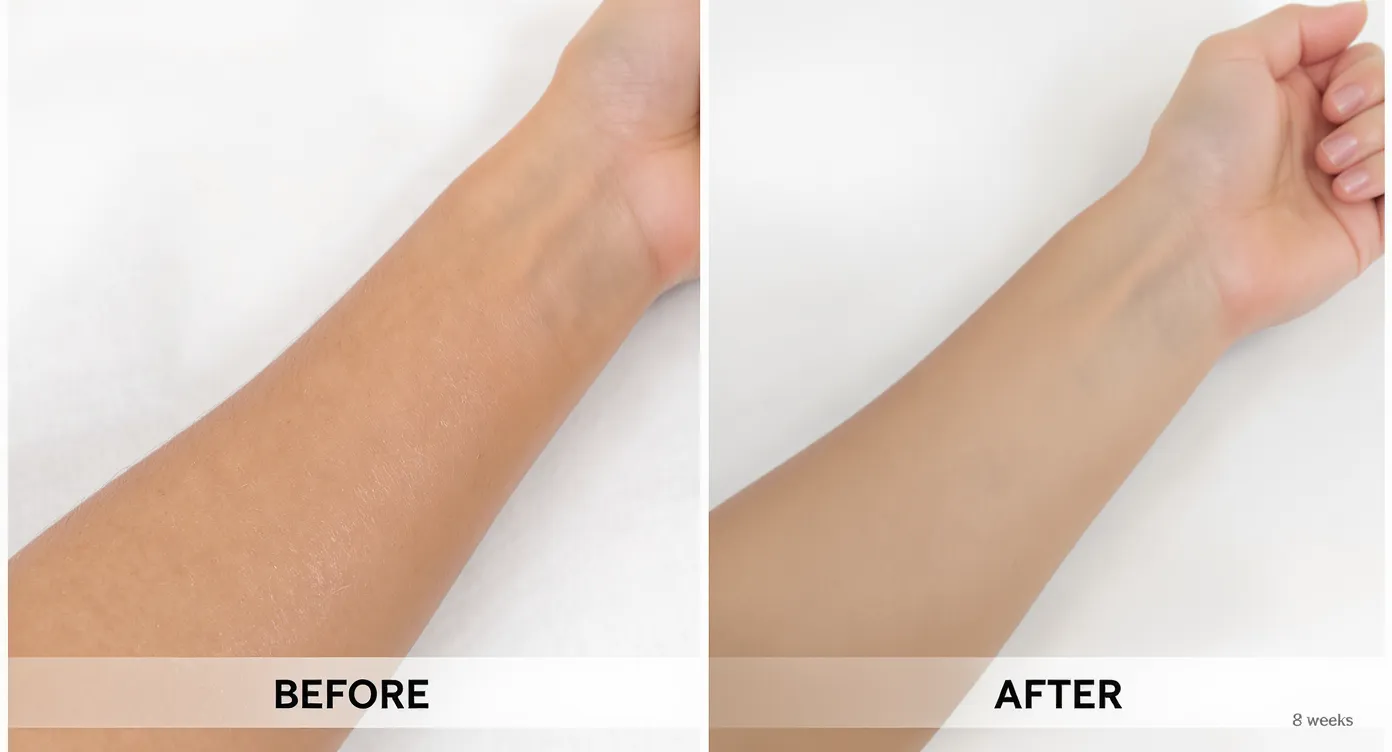
Pro tip: Ask the clinic to show calibrated before-after photographs under identical lighting and camera settings. This prevents misleading “Instagram filter” comparisons.
Strategic Sun-Care Plan Post Treatment
-
Apply broad-spectrum sunscreen (PA++++, SPF 50) every two hours outdoors.
-
Use topical antioxidants like niacinamide or vitamin C serums to suppress tyrosinase (learn more in our post on Benefits of Niacinamide for Your Skincare).
-
Consider oral Polypodium leucotomos extract (240 mg) which reduced UVB-induced erythema by 34 percent in a 2022 Indian double-blind trial.
-
Schedule maintenance laser or peel every 4-6 months during peak UV season.
Key Takeaways
-
To comprehend the question "what is tan removal" one has to get into the melanin biology and choose treatments that would essentially lead to breaking down the pigment in a safe manner.
-
Among the methods available, chemical peels, microdermabrasion, laser toning, and picosecond technology are there, each with different costs and downtimes as well as being the graded solutions.
-
The Dubai’s audits done in a real-world scenario show almost 70% clearing after the six low-fluence Q-Switched sessions when used with a regular sunscreen applied daily.
-
To get a tan removal treatment in an effective way, individuals require to check which technology to use, the qualifications of the clinician, and whether there is any standard evidence of before-after results.
-
Photoprotection and antioxidant skincare after the procedure are extremely important to keep the results.
Modern Aestheticss keeps on monitoring worldwide pigmentation research and works with board-certified dermatologists to improve the protocols. If you want to create a personalized plan or even combine your holiday in Dubai with advanced pico treatment, book a virtual consultation with our dermatology team today. The right data and expert guidance are what your journey to even and radiant skin starts with.