Acne scars can feel like the “after” that never ends, especially when you have tried scrubs, peels, or trending DIY hacks that leave your skin redder, drier, and more irritated than before. The good news is that you can reduce acne scars without damaging your skin, but it requires two things most people skip: correctly identifying what you are treating, and choosing collagen-building treatments that respect your skin barrier (particularly important in Dubai’s sun and heat).
This guide walks you through a skin-safe, dermatologist-aligned plan, from at-home routines that won’t backfire to in-clinic options like microneedling and fractional lasers.
First, make sure it’s actually a scar (not a mark)
Many people say “acne scars” when they are dealing with acne marks that can fade with time and the right skincare.
-
Acne marks: flat discoloration after a breakout.
-
Brown or gray marks are often post-inflammatory hyperpigmentation (PIH).
-
Red or purple marks are often post-inflammatory erythema (PIE).
-
-
Acne scars: texture changes, dents, pits, or raised areas that form when inflammation alters collagen during healing.
If you want a quick refresher, Modern Aestheticss explains the difference clearly in this guide: acne marks vs acne scars.
Why this matters: marks usually respond to pigment and redness care, while true scars typically require collagen remodeling, often with procedures.
Identify your scar type (so you don’t overtreat the wrong problem)
Different scar shapes respond to different techniques. A one-size-fits-all approach often leads to unnecessary irritation or disappointing results.
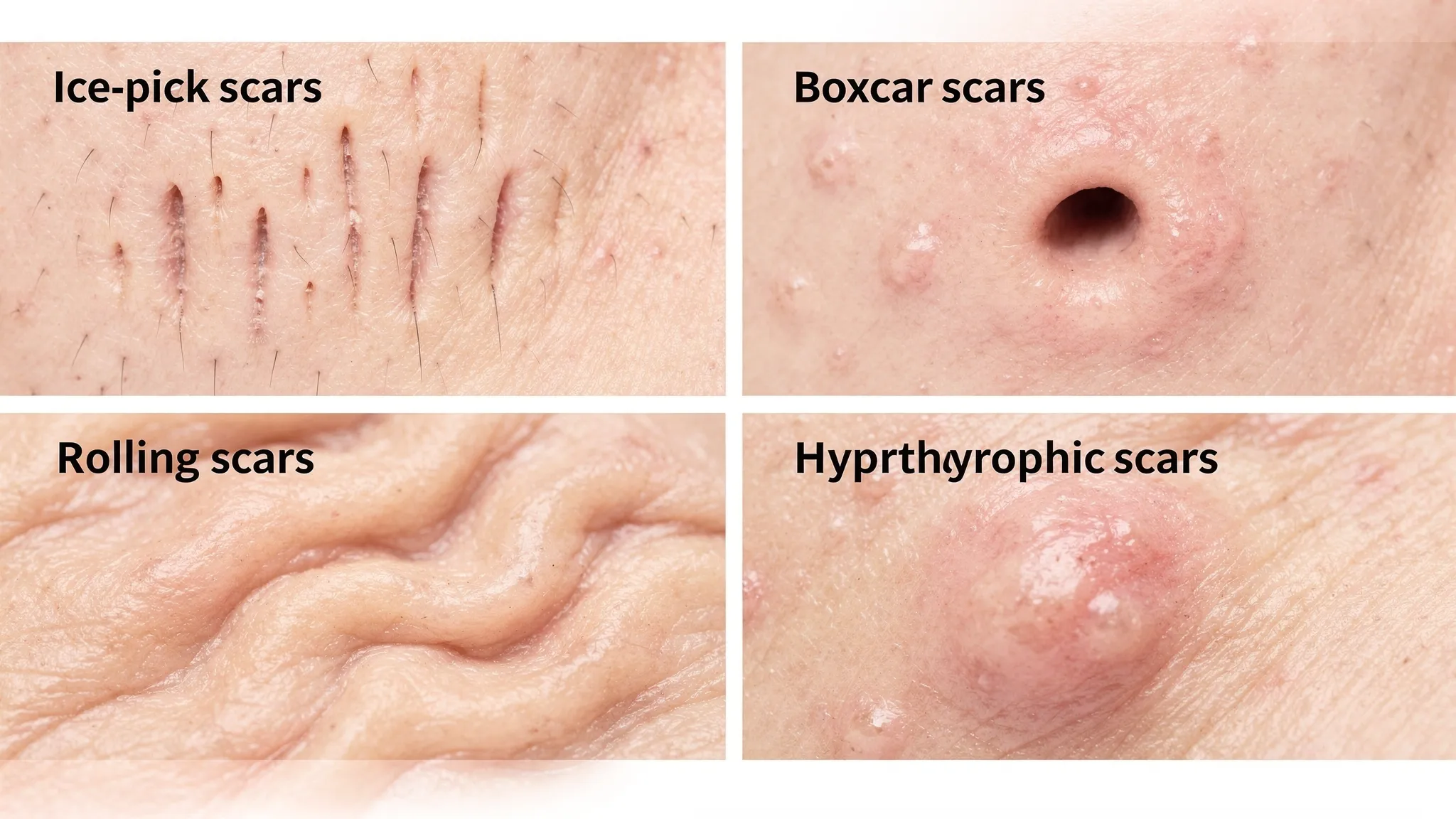
Atrophic (indented) scars
These are the most common and occur when too little collagen forms.
-
Ice-pick scars: narrow, deep “punched” marks.
-
Boxcar scars: broader depressions with more defined edges.
-
Rolling scars: wave-like texture caused by tethering under the skin.
Hypertrophic and keloid scars (raised)
These form when the skin produces excess collagen. They require a different strategy than indented scars, and aggressive resurfacing can worsen them if not planned carefully.
The #1 rule: control active acne first (or scars keep forming)
Scar improvement is much harder if new inflammatory breakouts continue. Before investing in scar sessions, prioritize acne control with a plan that fits your skin.
If you are dealing with frequent or painful breakouts, consider starting here: Acne treatment in Dubai.
A skin-safe home routine that supports scar fading (without over-exfoliating)
Home care can meaningfully improve discoloration and support texture, but it should not feel like “burning = working.” Barrier damage increases inflammation and can worsen PIH, especially in medium to deeper skin tones.
Daily essentials (the non-negotiables)
A protective routine is what keeps professional treatments safe and results stable.
-
Gentle cleanser: no harsh scrubs, no high-foam stripping cleansers.
-
Barrier-support moisturizer: look for ceramides, glycerin, hyaluronic acid, or panthenol.
-
Broad-spectrum sunscreen SPF 50+ every morning: this is essential for PIH prevention and for maintaining results after lasers, microneedling, or peels.
In Dubai, consistent sunscreen is not optional. UV exposure and heat-driven inflammation can deepen pigmentation and prolong redness.
Ingredients that help, with lower risk of skin damage
These can be effective when introduced slowly and used consistently.
Retinoids (adapalene, tretinoin, retinaldehyde) Retinoids encourage cell turnover and collagen support over time. They can help with uneven texture and marks, but irritation is common if started too aggressively.
-
Start 2 to 3 nights per week.
-
Use a moisturizer “sandwich” if you are sensitive.
-
Expect gradual change, not overnight transformation.
Azelaic acid Often well-tolerated for acne-prone skin, redness, and PIH. It is a strong option when you want pigment support with less irritation than many acids.
Niacinamide Supports the barrier, helps regulate oil, and can improve uneven tone. Modern Aestheticss covers practical use cases here: benefits of niacinamide.
Vitamin C (stable forms) Useful for brightening and antioxidant protection. If your skin is reactive, consider gentler derivatives and avoid stacking too many actives.
Careful exfoliation (AHA/BHA) Helpful for texture and clogged pores, but overuse is a major cause of barrier damage.
-
If you use an exfoliant, keep it to 1 to 2 times weekly.
-
Do not combine on the same night as retinoids until your skin is clearly tolerating both.
What to avoid if your goal is fewer scars and less pigmentation
A lot of “acne scar fixes” online cause micro-injury, burns, or prolonged inflammation.
-
DIY microneedling or dermarollers at home: infection risk, uneven depth, and higher PIH risk.
-
High-strength acids without supervision: chemical burns can create new marks that last longer than the original scar.
-
Harsh scrubs and cleansing brushes: these can worsen irritation and redness.
-
Lemon, baking soda, undiluted essential oils: common causes of irritant dermatitis and pigmentation issues.
-
Picking and squeezing: increases inflammation and the chance of tethered, deeper scars.
Here is a simple safety framework:
| Goal | Do (skin-safe) | Don’t (high-risk) |
|---|---|---|
| Fade dark marks | Daily SPF, azelaic acid, gentle brighteners | “Bleaching” hacks, harsh acids used daily |
| Improve texture | Retinoid consistency, professional collagen remodeling | DIY microneedling, aggressive scrubbing |
| Avoid PIH | Slow introductions, patch tests, dermatologist planning | Treating through irritation, tanning between sessions |
| Faster results | Combination plans with proper spacing | Stacking multiple procedures too close together |
In-clinic treatments that reduce acne scars with less chance of damage
True acne scars often need in-clinic collagen remodeling. Done correctly, these treatments are designed to be controlled and predictable, not traumatic.
Modern Aestheticss is an advanced skin & laser center in Dubai, and acne scar plans are typically built around scar type, skin tone, downtime preferences, and PIH risk. You can explore their dedicated overview here: acne scar treatment in Dubai.
Microneedling (and RF microneedling)
Microneedling creates controlled micro-channels that stimulate collagen. It is commonly used for atrophic scars and texture.
-
Often chosen when you want texture improvement with manageable downtime.
-
May be combined with regenerative add-ons in some clinical protocols.
Learn more about the clinic’s approach: microneedling in Dubai.
Chemical peels (superficial to medium depth)
Peels can help acne marks and mild texture by improving cell turnover and pigment distribution. The key is proper depth selection and spacing.
-
Better for marks and overall skin tone than deep pitted scars.
-
Useful in combination plans when done conservatively.
If you are interested in lower-downtime rejuvenation options, Modern Aestheticss also offers PRX-based protocols: PRX T33 treatment.
Fractional laser resurfacing
Fractional lasers can remodel collagen and improve scar depth and texture. Parameters matter a lot for safety and PIH prevention.
-
Often considered for boxcar and rolling scars.
-
Requires strict aftercare, especially sun avoidance and diligent SPF.
TCA CROSS (for ice-pick scars)
TCA CROSS is a technique where a high-concentration acid is applied precisely inside narrow scars to stimulate collagen.
-
Often used for ice-pick scars.
-
Should be performed by experienced clinicians to reduce pigment risk and avoid widening the scar.
Subcision (for tethered rolling scars)
Rolling scars are sometimes caused by fibrous bands pulling the skin downward. Subcision releases these tethers so the surface can lift.
-
Often a key step when rolling scars do not respond fully to resurfacing alone.
-
Sometimes paired with other treatments depending on the plan.
IPL and light-based options (mostly for marks, not pits)
IPL can be helpful for pigmentation and redness in selected skin tones, but it is not typically the primary tool for deep indented scars.
If redness or sun-related uneven tone is part of your concern, you can read about the clinic’s Nordlys device here: Nordlys IPL.
Which treatment is “safest” depends on your scar type and skin tone
The safest plan is usually the one that matches the problem precisely, rather than the strongest option available.
| Treatment | Best for | Typical downtime (varies by protocol) | Key safety focus |
|---|---|---|---|
| Microneedling | Mild to moderate atrophic scars, texture | Short, often a few days of redness | Sterility, conservative depth, aftercare |
| RF microneedling | Texture, pores, scars with added tightening | Short to moderate | Heat settings, PIH prevention |
| Chemical peels | PIH, dull tone, superficial texture | Minimal to moderate peeling | Right peel depth, not over-frequent |
| Fractional laser | Moderate scars, texture, resurfacing | Moderate, sometimes longer | Parameters for skin tone, sun avoidance |
| TCA CROSS | Ice-pick scars | Small scabs in treated points | Precision, pigment control |
| Subcision | Tethered rolling scars | Bruising/swelling possible | Anatomy expertise, staged combinations |
How to minimize irritation and PIH during scar treatment (especially in Dubai)
Acne scar treatment is not just what happens in the treatment room. It is also the 2 to 6 weeks around it.
Ask for a plan that respects your barrier
A good clinician will typically space sessions, adjust intensity, and recommend a routine that reduces inflammation, rather than pushing aggressive settings.
Avoid “stacking” strong actives before and after procedures
Even if your skin tolerates retinoids and acids normally, you may need to pause them around certain treatments. Overlapping irritation is one of the most common reasons patients develop prolonged redness or PIH.
Treat pigment risk proactively
If you have a history of marks that linger, your dermatologist may focus first on stabilizing inflammation and pigment pathways, then move to deeper remodeling.
Commit to strict sun protection
-
Daily broad-spectrum SPF 50+
-
Reapplication when outdoors
-
Hats and shade when possible
This is one of the biggest factors you control, and it directly affects whether your results look better or just different.
Realistic timelines: what “working” actually looks like
Scar remodeling is gradual because collagen remodeling is gradual.
-
Marks (PIH/PIE): often improve over weeks to months with consistent SPF and targeted topicals.
-
Textural scars: usually need multiple sessions and several months of collagen remodeling to see meaningful change.
A common frustration is stopping too early or switching treatments too fast. Track progress with consistent lighting photos every 4 to 6 weeks.
When to see a dermatologist sooner (to prevent new scars)
Do not wait if you have:
-
Painful cystic acne or nodules
-
Acne that is leaving new dents quickly
-
Dark marks that worsen after minor irritation
-
Raised, thick scars that suggest hypertrophic or keloid tendency
Early medical acne control reduces the risk of permanent scarring more than any “scar cream” later.
A safe way to start at Modern Aestheticss
If you want a structured plan rather than trial-and-error, start with an assessment focused on:
-
Whether you have marks, scars, or both
-
Your scar type (ice-pick, boxcar, rolling, raised)
-
Your skin tone and PIH risk
-
A staged combination plan (often the best way to improve scars without excessive downtime)
You can begin by reviewing Modern Aestheticss’ scar options here: acne scars, or book a consultation through the clinic website: modernaestheticss.com.