Which Treatment Works Better for Hair Loss PRP or PRF?
The loss of hair is often perceived as a quiet uxoriousness lifter, but the modern regenerative medicine has been extending to us options that are quite encouraging. PRP and PRF for Hair Loss have found their way to becoming two of the most sought treatments in Dubai, among the people who want natural hair restoration without going under the knife or using synthetic drugs. The two procedures draw on your blood but are not the same. Knowing the differences will allow you to choose the method that fits your objectives, way of life, and the condition of your scalp best.
Understanding PRP and PRF
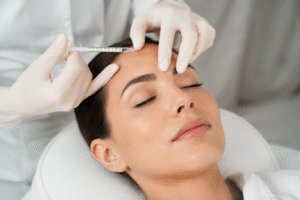
Platelet-Rich Plasma (PRP) is nothing less than a concentrate of platelets mixed with a small amount of plasma. When undergoing PRP hair treatment, the nurse first takes a vial of your blood, then it is rotated at high speed in a centrifuge where the platelet portion is separated. Platelets are full of growth factors, which are little proteins that manage the processes of wound healing, collagen production, and importantly, hair growth. When applied to the area of thinner hair, the growth factors excite the hair-stem cells in the hair bulge to move from their dormant phase (telogen) back into the active growth phase (anagen).
Platelet-Rich Fibrin (PRF) is the same principle but the end product is different as it is collected at a lower centrifugation speed and no anticoagulants are used. The slow spin keeps intact more white blood cells, stem cells, and forms a three-dimensional fibrin scaffold. Because the fibrin matrix is naturally formed, PRF causes the release of growth factors gradually over the course of about 7 to 10 days thus providing a continuous stimulus to the hair follicles.
Interest in both treatments has increased drastically in the clinical setting. According to a systematic review published in 2023 in Dermatologic Surgery, it was found that the patients receiving PRP reported a significant rise in hair density. The preliminary data on PRF show similar or better results, thus encouraging dermatology teams like ours at Modern Aesthetics to provide both options.
PRP vs PRF – Key Differences
| Feature | PRP | PRF |
|---|---|---|
| Centrifuge Speed | High (≈ 3,000 rpm) | Low (≈ 1,500 rpm) |
| Additives | Anticoagulant used | No additives |
| Cell Content | Platelets primarily | Platelets, leukocytes, mesenchymal stem cells |
| Matrix | Liquid plasma | Fibrin clot forming a gel |
| Growth-Factor Release | Rapid, within hours | Slow, sustained up to 10 days |
| Injection Viscosity | Thin; easy to inject | Thicker; may feel firmer |
| Session Interval | 4–6 weeks apart | 6–8 weeks apart |
- Biology
-
PRP delivers a rapid but short-lived burst of growth factors ideal for kick-starting hair growth therapy.
-
PRF’s fibrin network acts as a controlled-release reservoir, potentially supporting longer remodeling of the follicle environment.
- Comfort & Downtime
- Both involve micro-injections with fine needles. PRF’s thicker consistency can create mild, temporary bumps that settle within 24 hours. Overall downtime remains minimal for each.
- Cost & Availability
- Because PRF kits are newer and require specialized centrifuges, individual sessions can be marginally higher in price. However, needing fewer sessions may offset long-term cost.
Which Works Better for Hair Loss?
Our answer is, it depends on the individual. Clinical evidence shows improvement with both PRP hair treatment and PRF hair restoration, yet once’s certain scalp profiles respond differently.
• Early androgenetic alopecia (male or female pattern hair loss) Research suggests PRP improves hair count by 20–30 % after three sessions. PRF may push this further because leukocytes modulate inflammation driving miniaturization.
• Diffuse hair thinning post-pregnancy or illness ; PRF’s gradual cytokine release can create a more nurturing environment for fragile follicles, reducing post-shedding shock.
• Advanced miniaturization or scarring alopecia – Either therapy is best combined with medical treatments such as topical minoxidil, low-level laser devices, or oral finasteride in men. We sometimes blend PRP with microneedling to maximize penetration.
• Maintenance after hair transplant – Both injections improve graft survival, though PRF may reduce post-operative inflammation more effectively.
Side-by-side trials remain limited, but a 2024 pilot study in Journal of Cosmetic Dermatology comparing 25 PRP vs 25 PRF patients found PRF increased hair shaft thickness by 27 % versus 18 % for PRP after six months. Patient satisfaction scores also favored PRF. Still, variability was wide, underscoring the need for personalized evaluation.
At Modern Aestheticss, we begin each consultation with TrichoScan dermoscopy and, when requested, blood-work panels to ensure you are medically primed for either option. Our dermatologists may recommend starting with three PRP sessions if you desire a swift boost, then transitioning to PRF for long-term support. This hybrid protocol often leverages the strengths of each technology.
What to Expect During Treatment
-
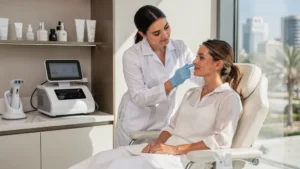
Consultation & Scalp Analysis – Your dermatologist reviews your medical history, hair cycle stageand lifestyle habits. Digital imaging establishes a baseline to quantify progress.
-
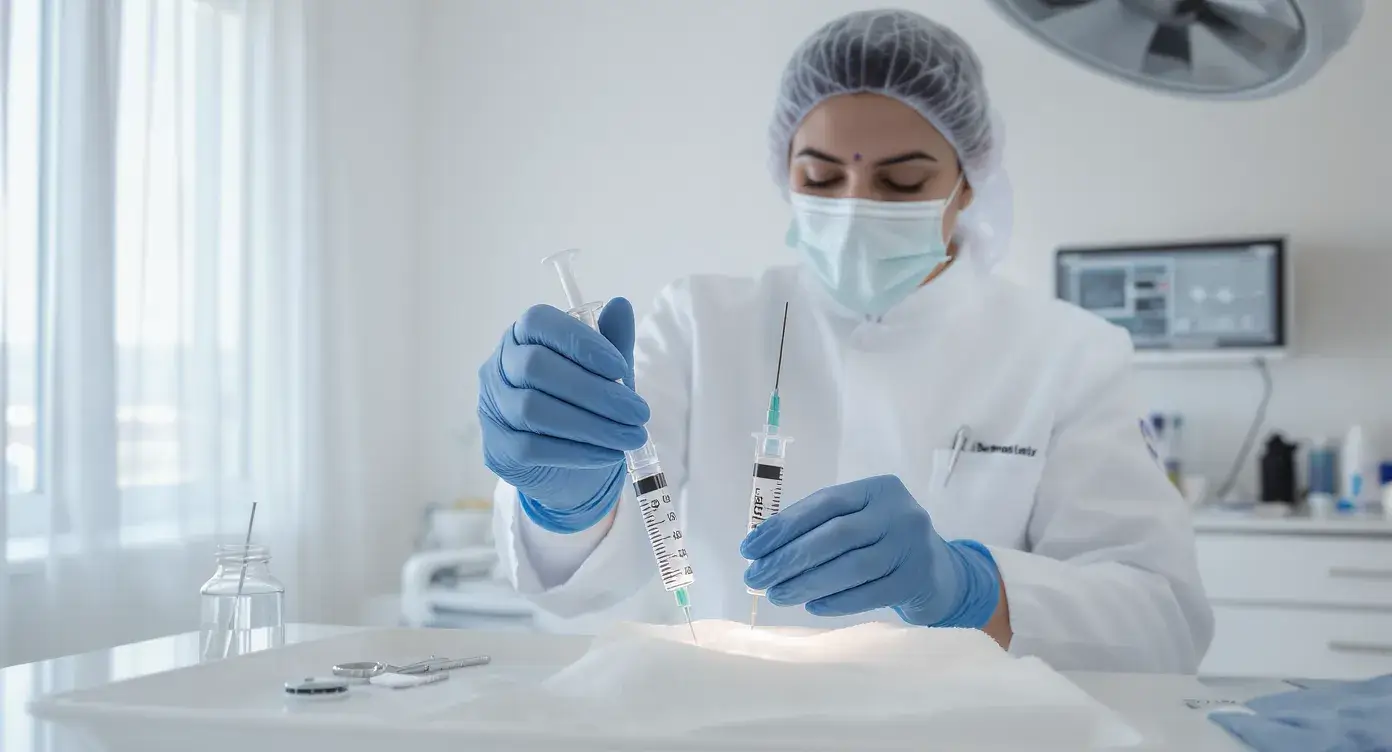
Blood Draw & Processing – A 10–20 ml sample is taken. For PRP, it is spun for 10 minutes; for PRF, 5 minutes. Processing is done in-house for sterility and speed.
-
Topical Numbing & Injection – A lidocaine cream minimizes discomfort. The platelet concentrate is then injected across thinning zones using a 32-gauge needle or mesotherapy device.
-
Post-Care – Expect pinpoint redness or tiny bumps that subside quickly. You may shampoo gently the next morning. We advise avoiding sauna, intense workoutsand alcohol for 24 hours to reduce bruising.
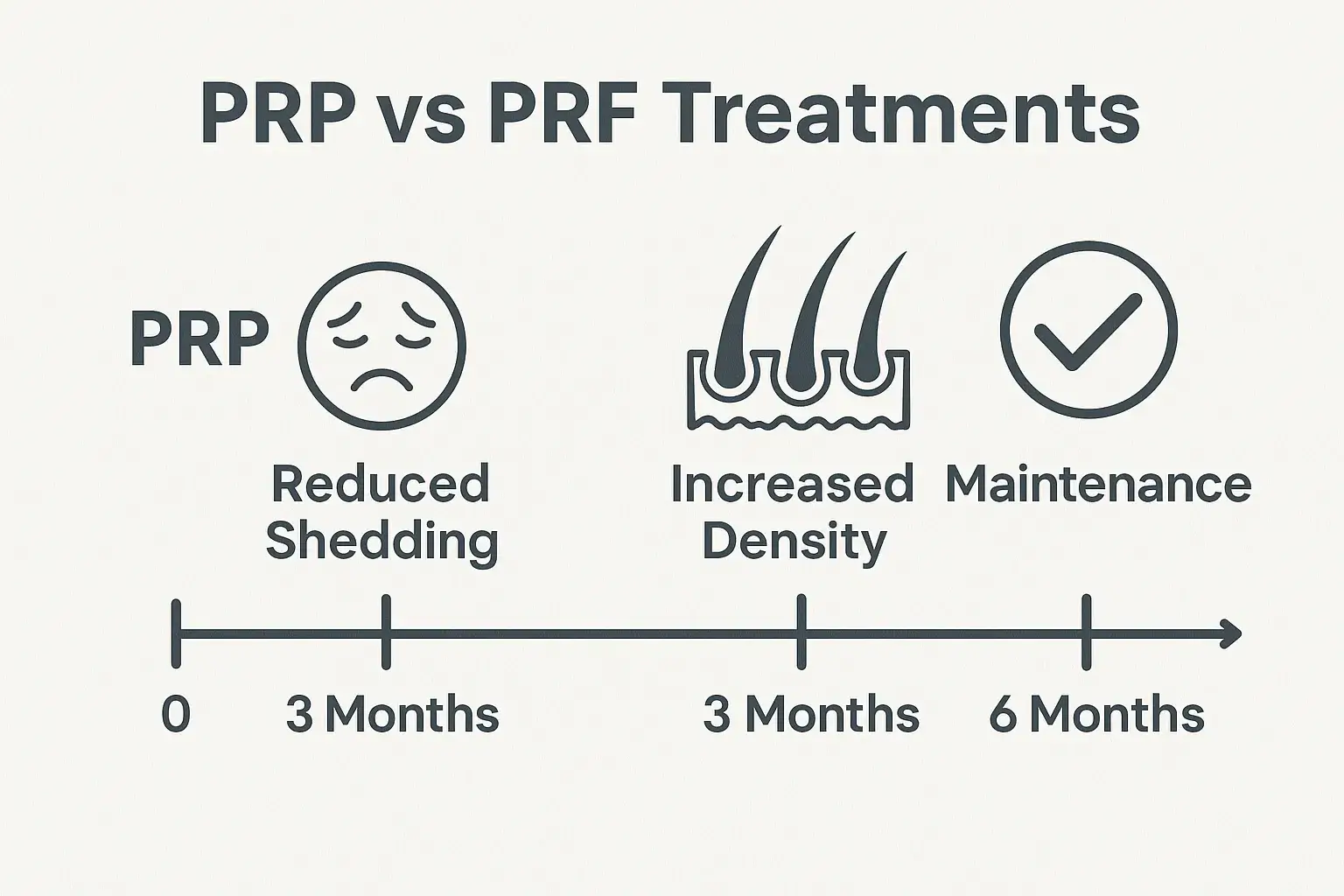
Follow-Up & Results – Most clients see reduced shedding in 4–6 weeks and visible density improvements after the second or third visit. Remember that hair growth cycles span months; patience is crucial.
Frequently Asked Questions
1. Is PRP or PRF safer?
Both are autologous, meaning they use your own blood, so allergy risk is virtually nil. Minor bruising or swelling can occur but resolves quickly.
2. How many sessions will I need?
Typical PRP courses involve 3–4 monthly sessions, while PRF may require 2–3 sessions spaced 6–8 weeks apart. Maintenance every 6–12 months sustains results.
3. Can I combine these injections with other hair thinning treatments?
Yes. Topical minoxidil, oral supplements, low-level laser capsand prescription medications complement platelet therapy. Your dermatologist will tailor a regimen.
4. Does it hurt?
Most clients rate discomfort 2–3 out of 10. Topical anesthetic and ice distractions keep treatment comfortable.
5. When should I avoid platelet therapy?
Active scalp infections, uncontrolled autoimmune disease and certain platelet disorders are contraindications. A pre-procedure assessment clarifies your suitability.