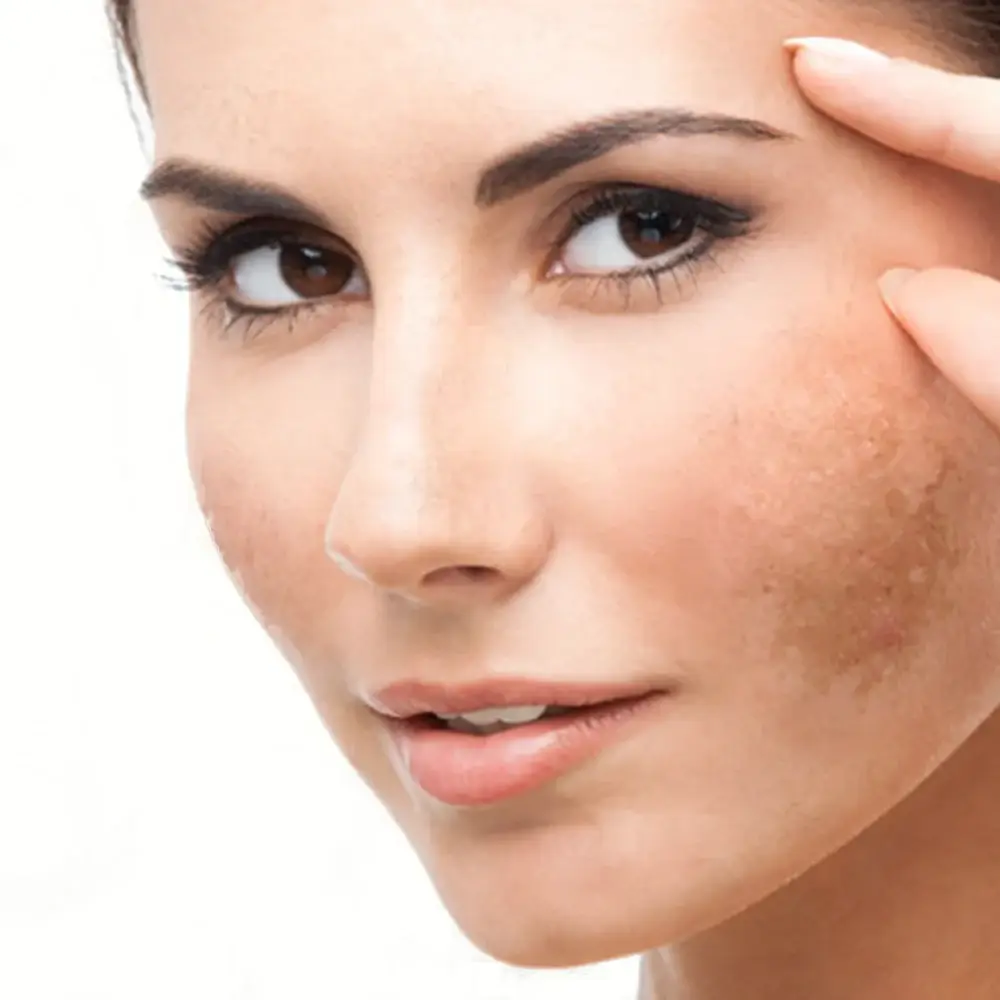
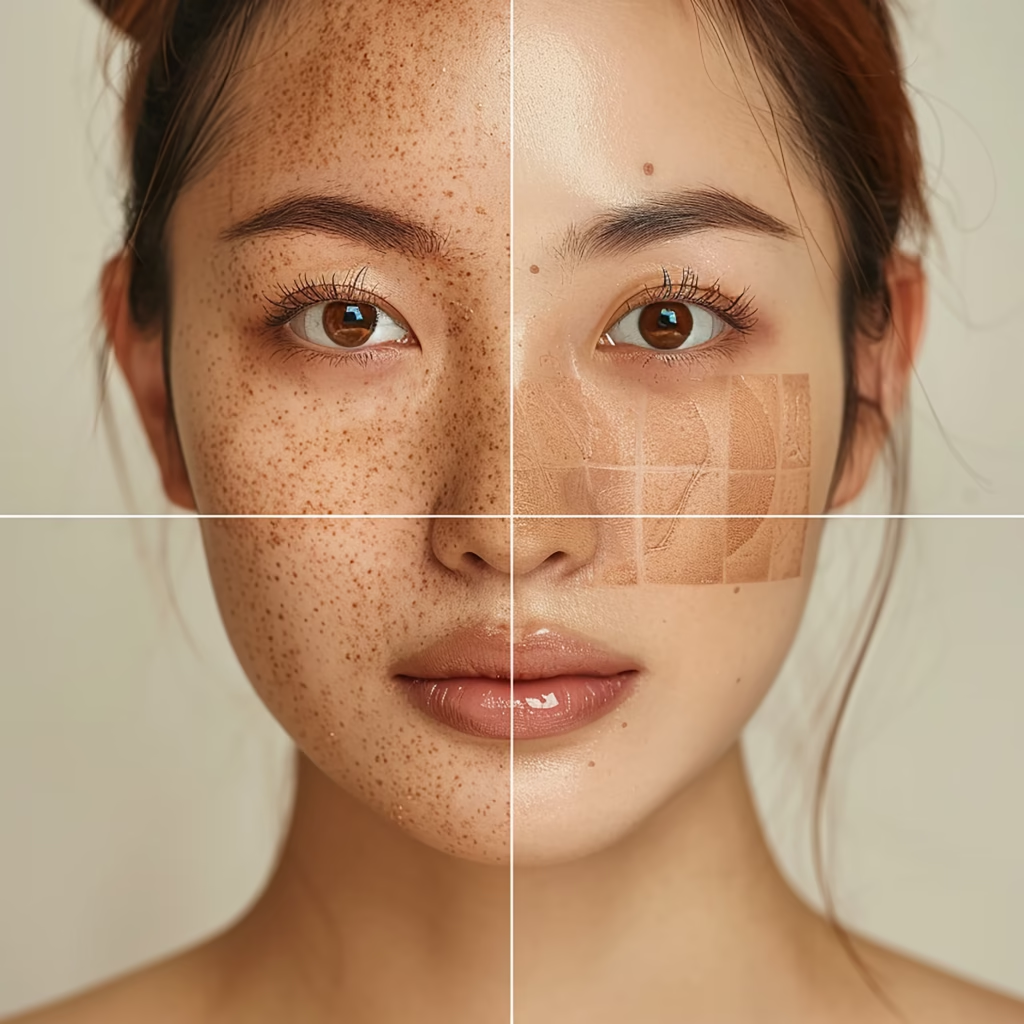
Melasma is a type of pigmentation that appears as patchy, uneven dark areas, most commonly on the face. Many people describe it as looking like a “mask” of discoloration, especially across the cheeks and forehead. You might notice it gets darker after a sunny weekend, a holiday, or even after a short walk outside.
Melasma on face skin is very common in sun-intense climates, and Dubai’s year-round UV exposure can make it more noticeable. It is also common for melasma to come and go in intensity, which can feel confusing and discouraging. Advanced treatments such as the Cosmelan peel are often recommended to help reduce pigmentation and improve skin tone.
What causes melasma?
Common causes and triggers include:
Sun exposure: UV and even visible light can stimulate pigment. In Dubai, sun exposure is not only “beach days”, it can be daily driving, walking between buildings, or sitting near bright windows.
Hormonal changes: Hormones can strongly influence pigmentation. This is why melasma is often linked with pregnancy or hormonal medications.
Pregnancy: Melasma is sometimes called “the mask of pregnancy” because it can appear or worsen during this time.
Genetics: If close family members struggle with melasma pigmentation, you may be more prone to it.
Skincare and lifestyle triggers: Harsh products, over-exfoliation, heat exposure, and irritation can worsen melasma and pigmentation patterns.
Safe, skin-type specific peels: glycolic, mandelic, TCA
Microneedling with brightening serums or tranexamic acid
Especially effective for darker or sensitive skin
Chemical peels can be very useful for melasma, especially when we use the right depth and ingredients for your skin. Patients often ask for the best peel for melasma, but the honest answer is: it depends on how sensitive your skin is, how deep the pigment sits, and whether your melasma is currently active or easily triggered.
Microneedling can also be combined with dermatologist-selected topical ingredients to support pigment control. It is not a one-session solution, but it can be a helpful part of a long-term plan.
Daily mineral sunscreen (SPF 50+ zinc or titanium-based)
Sun-safe habits: wide-brim hats, shaded outings
Follow-up care and long-term topical routines to prevent recurrence
Laser for melasma can be helpful in selected cases, but it is not a universal first step.
Melasma is sensitive to heat and inflammation. Some energy-based treatments can irritate the skin and trigger rebound pigmentation if they are too aggressive or not suited to your skin type.
When laser is considered, we typically approach it cautiously, with conservative settings and often as part of a broader plan rather than a standalone “quick fix.” If you are also considering light-based treatments for pigmentation more broadly, our overview of IPL photofacial treatment in Dubai can provide context, but melasma-specific decisions should be made after an in-person assessment.
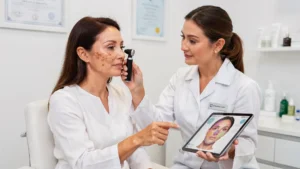
Why You Need A Doctor's Consultation
Everyone’s skin is different
Melasma has multiple causes — only a doctor can identify the real one
A customized treatment avoids side effects and speeds up results
Some treatments like lasers or oral medications require professional guidance
We focus on safety and long-term skin health
At Modern Aestheticss Dermatology and Laser Clinic, your treatment is always supervised by the best dermatologist in Dubai to ensure the safest and most effective results for your skin.
Melasma is not permanently curable, but it is very manageable with the right care and sun protection.
How soon can I see results?
Most patients see improvement in 4–6 weeks, but deeper melasma may take up to 3 months.
Is laser safe for melasma?
Yes, when performed by professionals. Q-switched, PICO, and LaseMD lasers are safe and effective. Some lasers like IPL are used cautiously depending on skin type.
Can I treat melasma during pregnancy?
Some treatments are avoided during pregnancy. Options like azelaic acid and certain peels can be considered under medical supervision.
Why does melasma come back?
Sunlight, hormones, and heat can trigger melasma again. Maintenance and daily SPF are key to keeping it under control.
Who is a Good Candidate for Melasma Treatment in Dubai
Melasma commonly affects people with medium to deeper skin tones, and it is very common in multicultural cities like Dubai.
You may be a good candidate for professional melasma care if:
Your pigmentation is patchy and keeps returning
Over-the-counter brightening products have not helped
Pigment worsens quickly with sun or heat
You are unsure whether it is melasma, sunspots, or post-acne marks
Laser may not be the first option if your skin is currently very reactive, if your melasma flares easily, or if you recently had significant sun exposure. A proper diagnosis comes first, then we choose the safest path.