Hyperpigmentation can feel stubborn in Dubai, especially when sun exposure, heat, and hormonal triggers keep “restarting” the problem. That is why many patients ask about the Cosmelan Peeling Process, a dermatologist-led protocol designed to visibly reduce uneven tone while building long-term control with home maintenance.
At Modern Aestheticss Dermatology and Laser Clinic, Dr. Shubhangi Perkar sees one pattern again and again: the best results come from understanding what will happen at each stage, planning your calendar wisely, and treating pigmentation as a “journey” instead of a one-day fix.
What Cosmelan is (and why the process matters)
Cosmelan is a professional depigmenting method commonly used for patchy pigmentation, post-acne marks, and melasma-prone skin. Patients often describe it as a “mask + home care” program rather than a single peel.
The reason the Cosmelan Peeling Process matters is simple: outcomes depend on consistency after the in-clinic step. Think of the in-clinic mask as the reset, then the home phase as the control system that helps prevent rebound pigmentation.
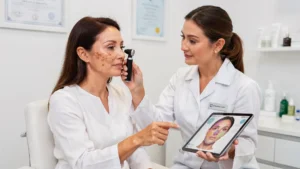
If you are specifically exploring cosmelan peel for melasma, your consultation should include a proper diagnosis (melasma vs sunspots vs post-inflammatory hyperpigmentation), trigger review (hormones, heat, UV), and a realistic timeline.
Step-by-step: From mask to glow
Below is a simple walk-through of what most patients experience during a cosmelan peel treatment plan. Exact steps and timing should always be tailored by your dermatologist.
1) Pre-treatment consultation (your plan starts here)
Your dermatologist typically checks:
-
Your pigment type and depth (surface vs mixed vs deeper)
-
Skin sensitivity and barrier health
-
Current skincare (especially retinoids, acids, and strong actives)
-
Lifestyle factors in Dubai (outdoor routines, beach days, work travel)
This stage is also where you should share any history of irritation, eczema, or previous post-inflammatory hyperpigmentation.
2) The in-clinic mask phase
On treatment day, the Cosmelan mask is applied in clinic and left on for a set number of hours, then removed at home following your dermatologist’s instructions.
What it can feel like:
-
Warmth, tingling, or mild burning sensations
-
Tightness as the mask dries
What you should plan for:
-
A low-key schedule the same day
-
Strict sun avoidance
This is why choosing a medically supervised cosmelan peel in Dubai matters, Dubai’s UV intensity and heat exposure can make aftercare more demanding than in cooler climates.
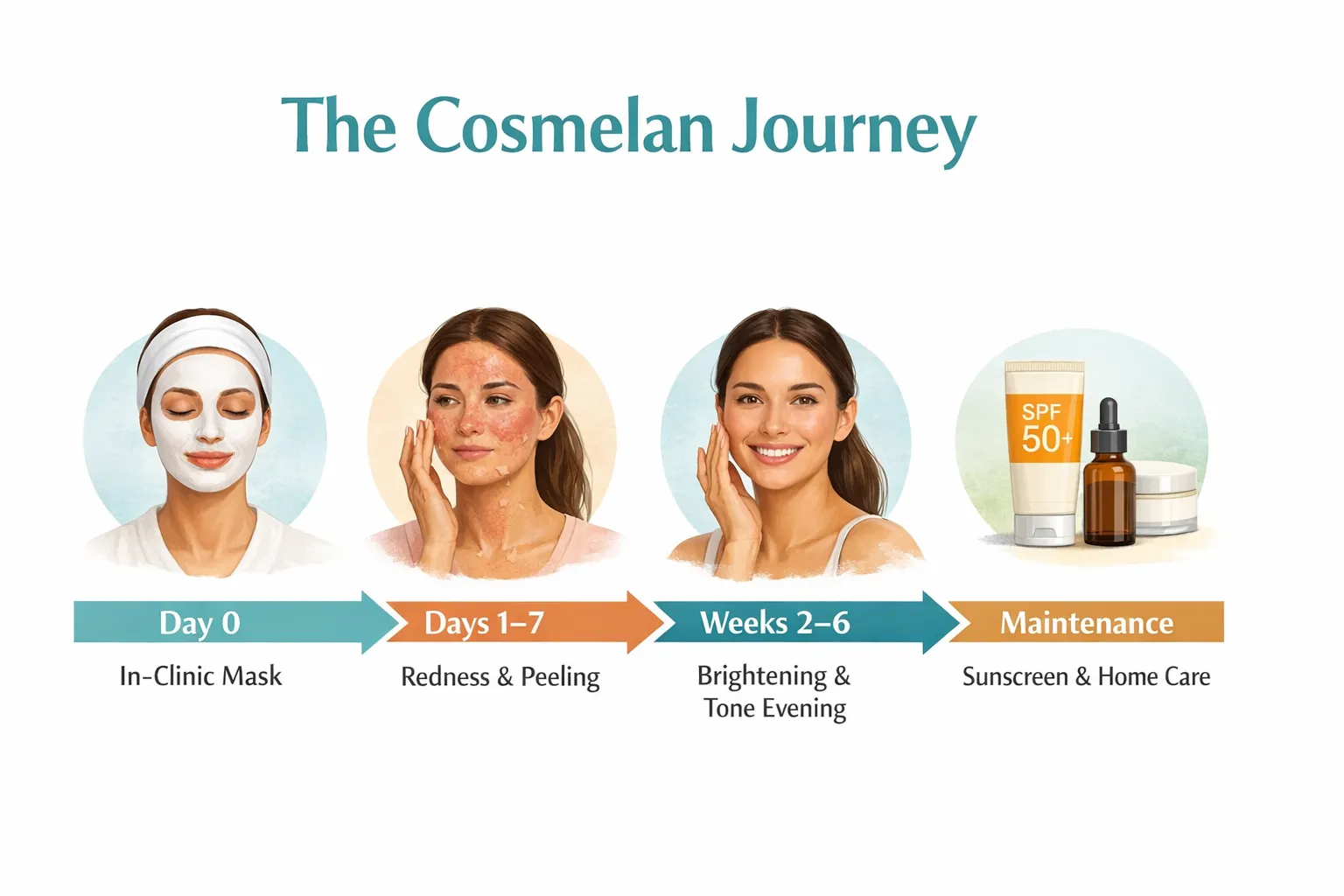
3) The first week: redness, tightness, and visible peeling
Most patients notice:
-
Redness (like a strong sunburn look)
-
Dryness and flaking
-
Sensitivity when washing
This is the stage people usually mean when asking about cosmelan peel down time. Many patients can still work, but may prefer to avoid important events, heavy makeup, or camera-facing meetings for a few days.
4) Weeks 2 to 6: brightness improves, tone starts to even out
Peeling generally becomes lighter, and the skin often looks more luminous. This phase is when adherence really matters.
Home care usually includes a maintenance product commonly referred to as cosmelan 2 peeling, used as directed to keep pigment activity under control. Skipping or rushing this phase is one of the biggest reasons for uneven results.
5) Longer-term maintenance: protecting results in Dubai
Pigment management is not only about treatment, it is about protection. A high-protection broad-spectrum sunscreen is essential.
A practical timeline: what most patients can expect
Every skin is different, but here is a straightforward guide patients often find useful.
| Phase | What you see | What it means | Your focus |
|---|---|---|---|
| Mask day | Tingling, tightness | Active phase begins | Follow timing and removal instructions exactly |
| Days 1–7 | Redness, dryness, peeling | Expected shedding and barrier stress | Gentle cleanser, heavy hydration, zero picking |
| Weeks 2–6 | Brightening, patch softening | Pigment pathways calming | Consistent home care, daily SPF |
| Months ahead | More stable tone | Maintenance is key | Trigger control (UV, heat), dermatologist follow-ups |
“Before and after”: how to read results realistically
Patients love searching cosmelan peel before and after, but it helps to know what makes those photos meaningful.
A trustworthy before-after comparison typically matches:
-
Lighting (same window, same time of day)
-
Angle and distance (front and both sides)
-
No heavy makeup or filters
Real-world improvement usually looks like:
-
Softer borders of patches first, not instant disappearance
-
More even tone across cheeks and upper lip over time
-
A gradual shift to “clearer” skin rather than a single dramatic overnight change
Strategic advice: take your own progress photos weekly for 6 weeks. This prevents the common mistake of judging results day-to-day, when peeling and redness can distort how you perceive your pigment.
How Cosmelan compares with other pigmentation options
In Dubai, patients often choose between peels, lasers, topical plans, and combination protocols. A dermatologist can help you decide based on pigment type, skin tone, and lifestyle.
| Option | Best for | Typical downtime pattern | Key limitation |
|---|---|---|---|
| Cosmelan-style depigment program | Stubborn mixed pigmentation and melasma-prone patterns | Front-loaded peeling, then recovery | Needs strict maintenance to reduce relapse risk |
| Laser or IPL | Sun damage and select pigment types | Often minimal to moderate | Not every pigment type responds the same, melasma needs caution |
| Other Options: Chemical Peels | Mild dullness, texture, light pigment | Often mild, varies by depth | May require multiple sessions for stubborn pigment |
| Microneedling, For Collagen Stimulation | Texture, pores, early scars, some pigment | Usually a few days of redness | Needs series-based approach |
Where do tightening and wrinkle-focused treatments fit?
-
HIFU (High-Intensity Focused Ultrasound) is primarily used for lifting and firmness, not pigment removal.
-
For expression lines, Botox can complement a glow plan by smoothing movement-related wrinkles.
-
For volume loss and wrinkle smoothing (Liquid Facelift): Dermal Fillers can restore contours, but do not treat pigment directly.
What about acne marks and scars?
Many patients ask about cosmelan peel for acne scars. It is important to separate two things:
-
Dark marks after acne (post-inflammatory hyperpigmentation) may improve as pigmentation improves.
-
True textural scarring often needs targeted Acne scar treatment such as microneedling, energy-based devices, or a combined plan.
Your dermatologist may sequence treatments so the skin calms and stabilizes first, then texture-focused procedures are added safely.
When Cosmelan may not be the right first step
A dermatologist-led assessment matters because not every patient should start immediately. Common reasons to delay or adjust include:
-
Active irritation or a compromised skin barrier
-
Recent aggressive treatments without recovery time
-
Certain medications or skin conditions that increase sensitivity
If your main concern is deep, complex melasma, it can be helpful to discuss a broader Melasma Treatment in Dubai strategy that includes trigger control, maintenance skincare, and careful selection of in-clinic procedures.
Frequently Asked Questions
How long does the peeling last? Most visible peeling is concentrated in the first week, then settles. Brightening and tone improvement are typically assessed over several weeks, not days.
Will my melasma come back after Cosmelan? Melasma can relapse because triggers (UV, heat, hormones) can persist. Maintenance skincare and strict sun protection are key parts of keeping results stable.
Can I wear makeup during recovery? Many people wait until the skin is less irritated and flaking has reduced. Your dermatologist will guide you based on your skin’s condition.
Is it safe for darker or mixed skin tones common in Dubai? Many pigment protocols are designed with diverse skin tones in mind, but safety depends on correct diagnosis, proper use, and aftercare. Always do it under dermatologist supervision.
Can I combine Cosmelan with lasers, microneedling, or injectables? Often yes, but timing matters. Many clinics sequence treatments to protect the skin barrier and reduce the risk of irritation or rebound pigmentation.
Ready to plan your “mask to glow” journey?
If you are researching the Best Dermatologist in Dubai for pigmentation concerns, book a consultation at Modern Aestheticss Dermatology and Laser Clinic with Dr. Shubhangi Perkar to confirm your pigment type and map out a safe plan.