Blog
Forehead Lines Treatment in Dubai: How to Remove Forehead Wrinkles for Good
You catch a glimpse of yourself in the mirror and
Keloids are raised, thickened scars that grow beyond the original wound’s boundaries. They occur when collagen continues to accumulate even after the skin has healed, forming a visible, often itchy or uncomfortable mass. Keloids may appear pink, red, or brown and often worsen over time if left untreated.
At Modern Aestheticss Dermatology and Laser Clinic in Dubai, we provide specialist-led keloid treatments using a combination of injections, laser therapy, cryotherapy, and scar management protocols for safe, effective results.
Keloids are more common in:
Common triggers include:
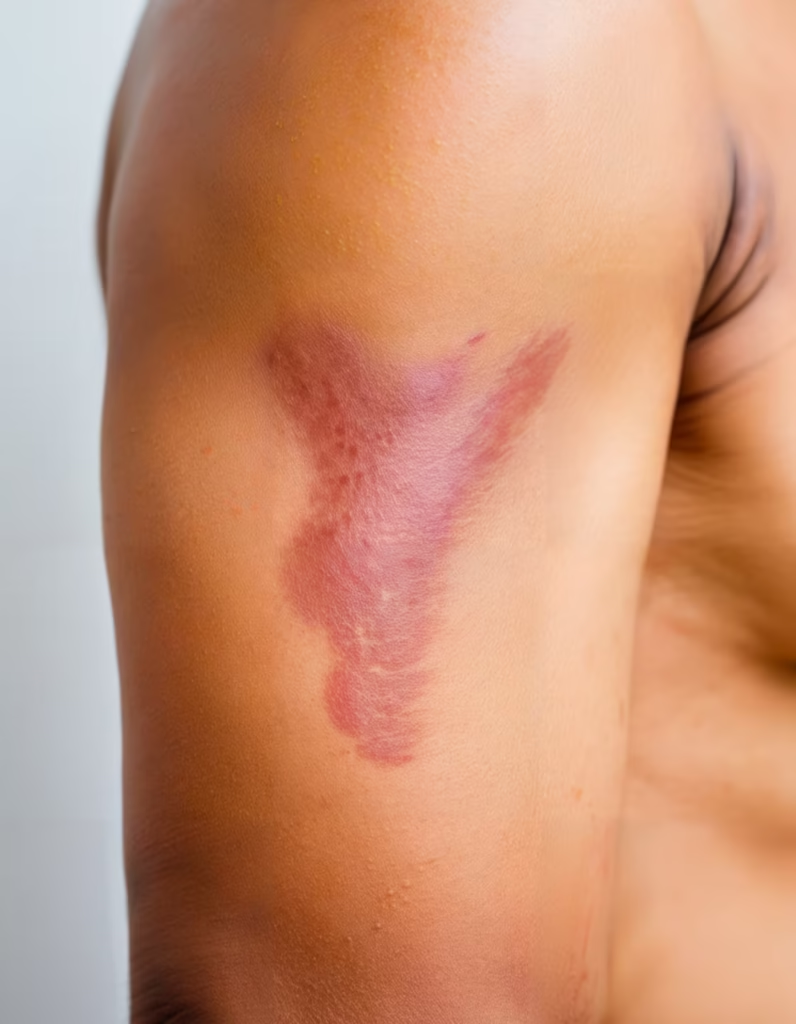
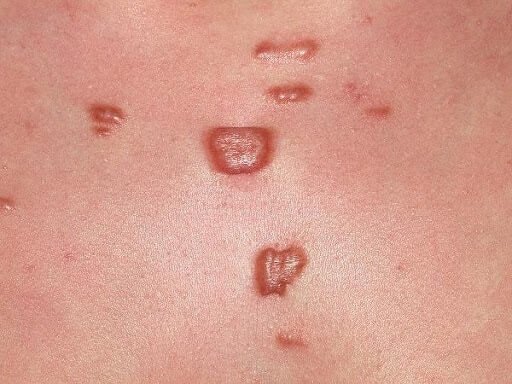
Our keloid treatment protocol is customized for each scar’s size, age, location, and behavior—using proven methods and advanced equipment available at our Dubai clinic.
Injectable treatments are commonly used to help flatten and soften keloids. These are performed directly into the scar tissue and are typically spaced across multiple visits. Patients often notice gradual changes, such as reduced itchiness first, then improved softness and a flatter profile.
Cryotherapy keloid treatment uses controlled freezing to help flatten and soften scar tissue. It is usually considered for smaller lesions or as part of a combined approach. The treated area can blister or crust temporarily, and in some skin tones there is a risk of lightening or darkening afterwards, so technique and patient selection matter.
Laser for keloid scars may be used to improve redness, reduce thickness, and help the scar feel less tight. Different laser types are used for different goals, and the choice depends on scar features and skin tone. Our clinic uses advanced vascular and resurfacing lasers:
For large or resistant keloids:
Keloids usually start after the skin has been injured, even by something that seems minor.
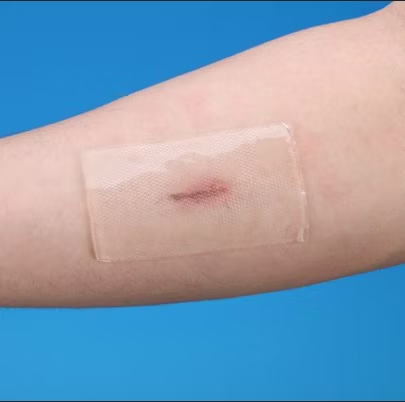
Keloids are medically complex—treating them improperly can lead to regrowth, pigmentation, or even worsening. Over-the-counter creams and oils are rarely effective.
At Modern Aestheticss Dermatology and Laser Clinic, our dermatologist:
Keloids require expert care, especially when they cause pain, discomfort, or cosmetic concerns, so consulting the best dermatologist in Dubai is essential.
Not always. However, our combination approach can flatten, fade, and dramatically improve their appearance, often making them barely noticeable.
Steroid injections may sting briefly. Cryotherapy and laser are generally well tolerated with cooling techniques used in clinic.
They might, but when surgery is combined with radiotherapy and silicone compression, recurrence rates are significantly lower.
A multimodal protocol—steroid injections, silicone therapy, cryotherapy or laser, and surgery when needed—delivers the most reliable results.
Most patients need 3–6 injection sessions and 3–8 laser sessions. Maintenance may continue for several months.
You catch a glimpse of yourself in the mirror and

Fine Lines and Wrinkles Treatment means improving early creases fine

Aging is not just “wrinkles.” It is a mix of
Fine lines, sagging, dullness and spots rarely come from one


Modern Aestheticss © All Rights Reserved.
UAE MOHAP Advertisement License No : BQNU6784-280326